You copy a string. Before you can do anything with it, you have to figure out what it is and which tool handles it. Is this a JWT? Base64? A hex color? A plain UUID? For an experienced developer this recognition happens almost instantly, but it is still a small cognitive step between copying something and actually acting on it — and it is a step that repeats every single time.
Multiply that recognition-and-navigation step across the dozens of small utility tasks in a typical day, and it adds up to a surprising amount of mental overhead spent just routing yourself to the right tool, before you have even started the actual task.
Pattern Recognition Is a Solvable Problem
JWTs have a distinctive three-part, dot-separated structure with a recognizable Base64url header. Hex colors start with a pound sign and are exactly six or eight hex characters. UUIDs follow a strict eight-four-four-four-twelve hyphenated format. JSON starts with a brace or bracket. These patterns are precise enough that software can recognize them just as fast as an experienced developer can, without requiring the developer to make the identification manually every time.
Let the Clipboard Suggest the Tool
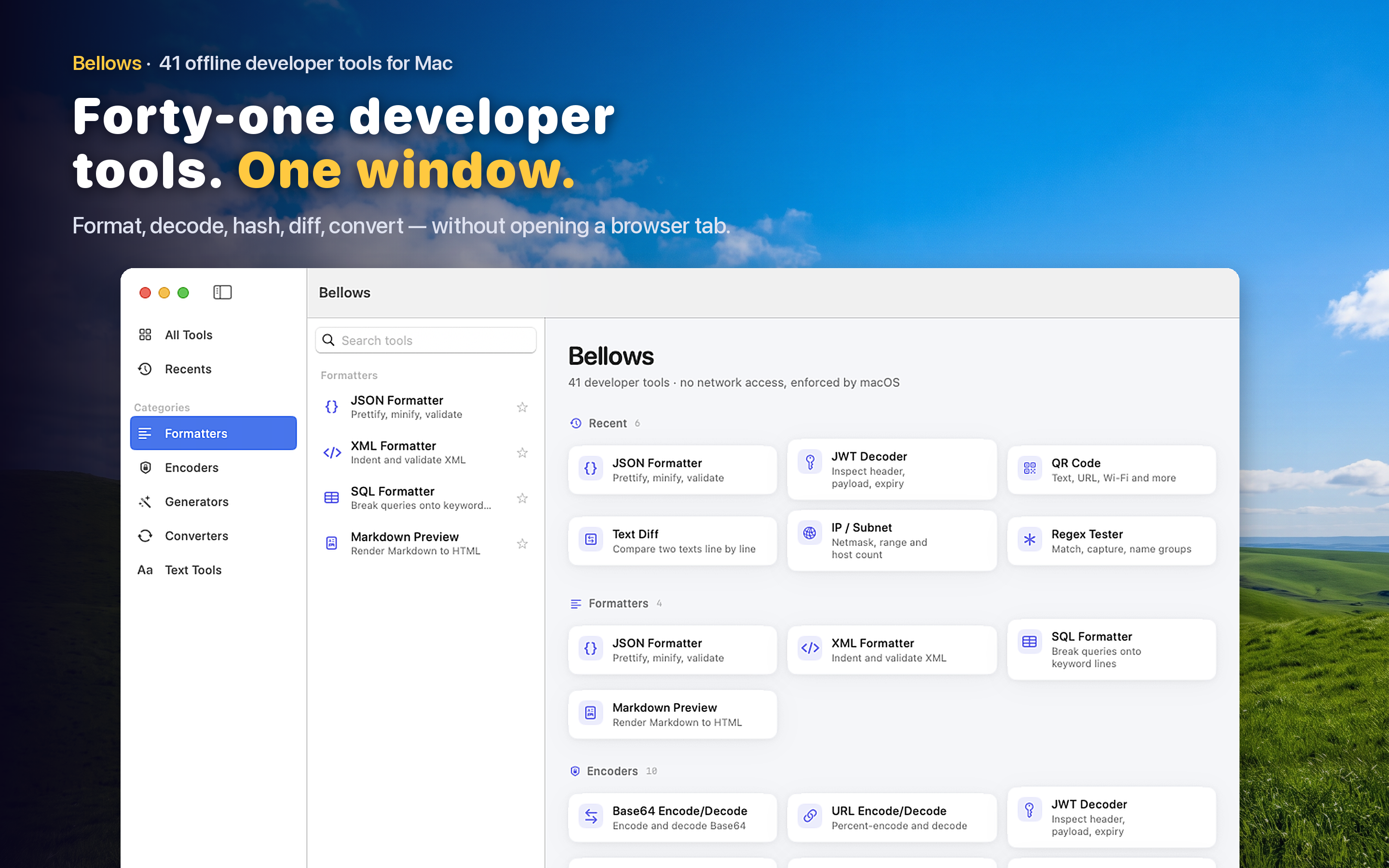
Bellows reads your clipboard when you open it and suggests the matching tool automatically. Copy a JWT and the decoder is already highlighted. Copy JSON and the formatter is one click away. Copy a hex color and the color converter is ready. The recognition step happens instantly, before you even open the sidebar.
Fewer Clicks, Less Decision Fatigue
Removing the "which tool do I need" step from a repetitive task sounds minor in isolation, but across dozens of daily interactions it removes a meaningful amount of friction — friction that otherwise nudges you toward just leaving the data unformatted because reaching for the right tool felt like too much effort.
Useful for Tools You Forget Exist
With 41 tools available, it is easy to forget that a specific converter or generator exists at all. Clipboard-based suggestions surface the relevant tool even when you would not have thought to look for it, which is often more valuable than the time saved on tools you already use daily.