macOS has a built-in "Speak Selection" feature: highlight text, right-click, and choose "Speech." It works well — when the text is selectable. But the moment you need text read aloud from an image, a scanned PDF, a video frame, or a non-interactive UI element, the speech feature has nothing to work with. You can't speak what you can't select.
The Gap Between Screen Content and Speech
Many situations call for having screen text read aloud. Proofreading catches errors your eyes skip. Multitasking benefits from audio — you can listen to extracted content while working on something else. Accessibility needs extend to content that isn't natively selectable. Language learners benefit from hearing unfamiliar text pronounced.
But the built-in speech tools only operate on standard text selections. If the text is in an image, rendered as a graphic in a web app, displayed in a video, or locked inside a scanned document, macOS offers no path from "visible on screen" to "read aloud." You'd need to manually transcribe the text first, which defeats the purpose.
Select Any Text, Hear It Spoken
Optic combines screen-level OCR with text-to-speech. Activate it from the menu bar, drag over any visible text — regardless of its source — and you can have the captured text read aloud. No manual transcription, no dependency on the text being natively selectable.
Proofreading OCR Results
After extracting text from a scan or image, hearing it read aloud helps you catch OCR errors that look correct on screen. A misread letter or a garbled word becomes obvious when spoken but might slip past visual review.
Accessibility
For users who rely on screen readers, content trapped in images and non-selectable formats creates barriers. Optic bridges that gap by converting any visible text into both clipboard text and spoken audio, making previously inaccessible content available.
Multitasking and Language Learning
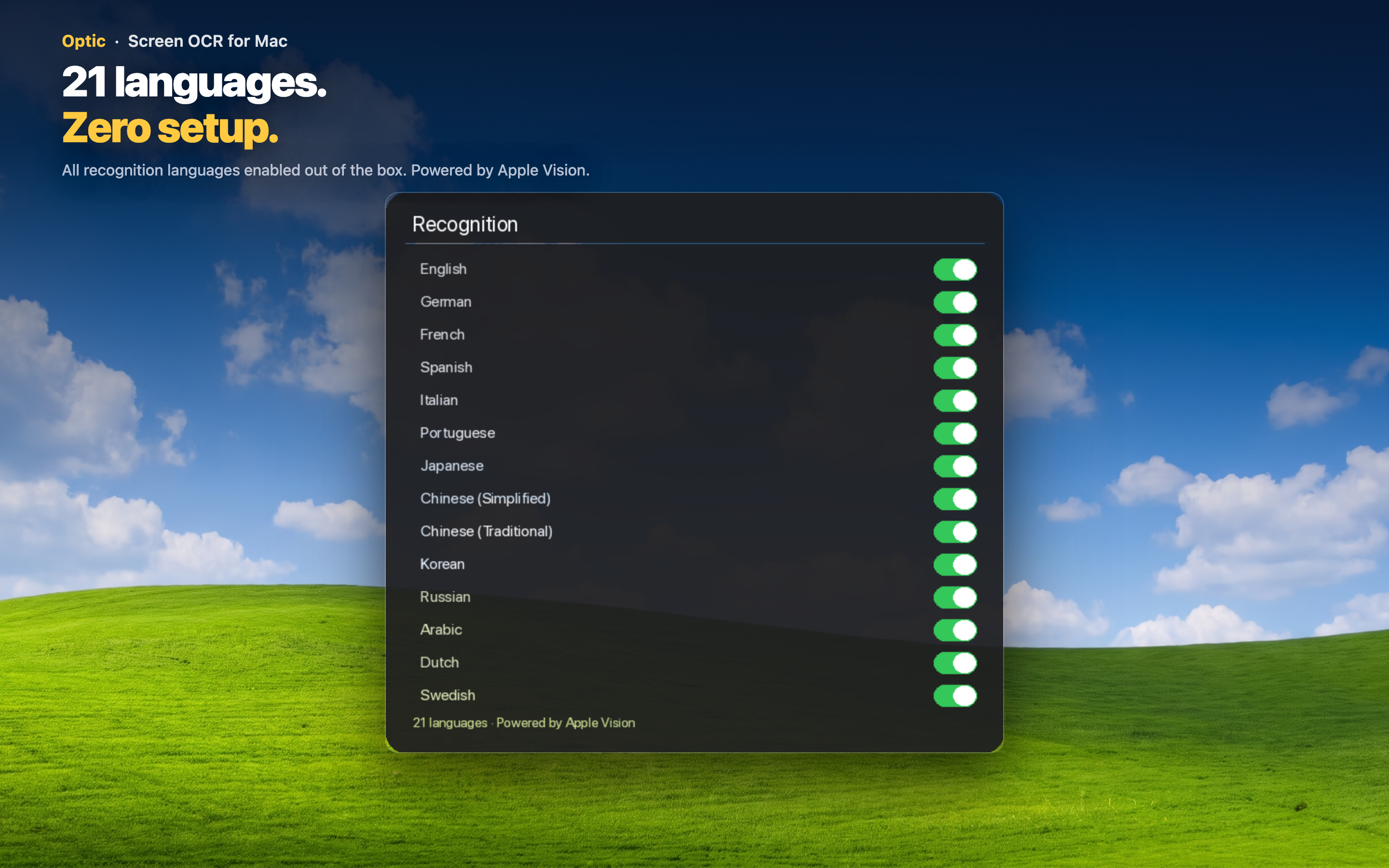
Extract a passage from a document or web page and listen to it while you cook, commute, or exercise. Language learners can hear unfamiliar words pronounced correctly by selecting text in a foreign language and using the speech output.
Capture History with Speech
Since every capture is saved in the menu bar history, you can return to a previous extraction and have it read aloud again — useful for reviewing notes or revisiting content from earlier in your session.