Du lytter til musik og hører et pop. Så en knitren. Så en hakken, hvor lyden forsvinder i et brøkdel af et sekund og kommer tilbage. Det er ikke sangen — det er din Mac. Lydknitren på macOS er vanvittigt almindeligt, og det har mindst seks forskellige årsager.
Denne guide dækker alle kendte årsager til lydens knitren, knæk og hakken på Mac, fra softwarerettelser til det ene hardwareproblem, du bør kende til.
1. Genstart Core Audio (den hurtige løsning)
Den mest effektive løsning på pludselig lydknitring er at genstarte macOS's lyddaemon. Åbn Terminal og kør:
sudo killall coreaudiod
Lyden forsvinder i et sekund og genstarter. I mange tilfælde stopper knitringen med det samme. Dette virker, fordi coreaudiod — processen, der styrer al lyd på macOS — kan komme i en korrupt tilstand efter dvale-/vågencyklusser, Bluetooth-enhedsforbindelser eller app-nedbrud.
Hvis det løser det, skyldes knitringen et midlertidigt dæmonproblem. Hvis det kommer tilbage regelmæssigt, så læs videre for permanente løsninger.
2. CPU-overbelastning
Lydknitring hænger ofte sammen med højt CPU-forbrug. Når din Mac's CPU er maxet, kan den ikke behandle lydbuffere hurtigt nok, hvilket skaber huller, der lyder som pop og knitren.
Tjek: Åbn Aktivitetsmonitor (Applikationer → Værktøjer) og kig på CPU-fanen. Hvis du ser konsekvent høj CPU-brug (80%+), er det sandsynligvis årsagen.
Løsning: Luk unødvendige apps, især ressourcekrævende som browsere med mange faner, videoeditorer eller VM'er. Hvis en bestemt proces bruger for meget CPU, så overvej om den opfører sig normalt eller skal genstartes.
3. Bluetooth-lydproblemer
Bluetooth er den mest almindelige kilde til knitren for trådløse hovedtelefon- og højttalerbrugere. Flere ting kan forårsage det:
- Interferens: WiFi, USB 3.0-enheder og andre Bluetooth-enheder kan forstyrre din lydforbindelse. Prøv at flytte tættere på din Mac eller fjerne forstyrrelser.
- Codec-skift: Når en app aktiverer din mikrofon, skifter macOS fra AAC til SCO-codec. Denne overgang kan forårsage en kort knitren eller et pop.
- Bluetooth-overbelastning: Hvis du har mange Bluetooth-enheder tilsluttet samtidig, kan radioen have problemer. Afbryd enheder, du ikke bruger.
Løsning: Nulstil Bluetooth ved at holde Shift+Option, klikke på Bluetooth-ikonet i menulinjen og vælge "Nulstil Bluetooth-modulet" (hvis tilgængeligt). Alternativt kan du fjerne enheden fra Bluetooth-indstillingerne og parre den igen.
4. Mismatch i stikprøvefrekvens
Hvis din lydudgangsenhed kører med en anden samplefrekvens end den lyd, der afspilles, skal macOS resample i realtid. Denne resampling kan introducere artefakter — især ved lavere bufferstørrelser.
Tjek: Åbn Audio MIDI Setup (Applikationer → Værktøjer), vælg din output-enhed og tjek samplingsfrekvensen. Almindelige frekvenser er 44,1 kHz (CD-kvalitet) og 48 kHz (video-/streamingstandard).
Løsning: Indstil sampleraten, så den passer til dit mest almindelige brugsscenarie. For musik: 44,1 kHz. For video/streaming: 48 kHz. Hvis du bruger et USB-lydinterface, så se dokumentationen for optimal samplefrekvens og bufferstørrelse.
5. Problemer med USB-lydenhedsbuffer
Eksterne USB-lydenheder (DAC'er, lydinterfaces, USB-hovedtelefoner) kan knitre, hvis bufferstørrelsen er for lille til dit systems aktuelle belastning.
Løsning: I Audio MIDI Setup skal du vælge din USB-enhed og prøve at øge bufferstørrelsen (hvis muligheden er tilgængelig). I lydapplikationer som Logic, Ableton eller GarageBand, øg I/O-bufferstørrelsen i lydindstillingerne. En større buffer betyder lidt mere latenstid, men færre lydfejl.
6. macOS opdateringsregression
Nogle macOS opdateringer introducerer lydfejl. Dette er sket med næsten alle større macOS-udgivelser — Catalina, Big Sur, Monterey, Ventura, Sonoma, Sequoia og Tahoe har alle fået lydknitring rapporteret efter den første udgivelse.
Løsning: Tjek om Apple har udgivet en pointopdatering (f.eks. 15.0.1, 15.1), der adresserer lydproblemer. Du kan også tjekke Apple Developer Forums og Reddit for at se, om andre brugere oplever det samme problem. Hvis det er en kendt macOS fejl, ankommer en løsning som regel inden for en eller to udgivelser.
7. Kerneudvidelser eller lyd-plugins
Tredjeparts lyddrivere, virtuelle lydenheder eller lydplugins kan kollidere med macOS's native lydstak. Dette er især almindeligt med ældre lydsoftware, der bruger kerneudvidelser (kexts), som er forældet i nyere macOS-versioner.
Løsning: Tjek om du har installeret tredjeparts lydsoftware: Soundflower, BlackHole, Loopback eller ældre lydinterfacedrivere. Prøv midlertidigt at deaktivere eller afinstallere dem for at se, om knitringen stopper. Hvis det gør, så tjek for opdaterede versioner, der er kompatible med din macOS version.
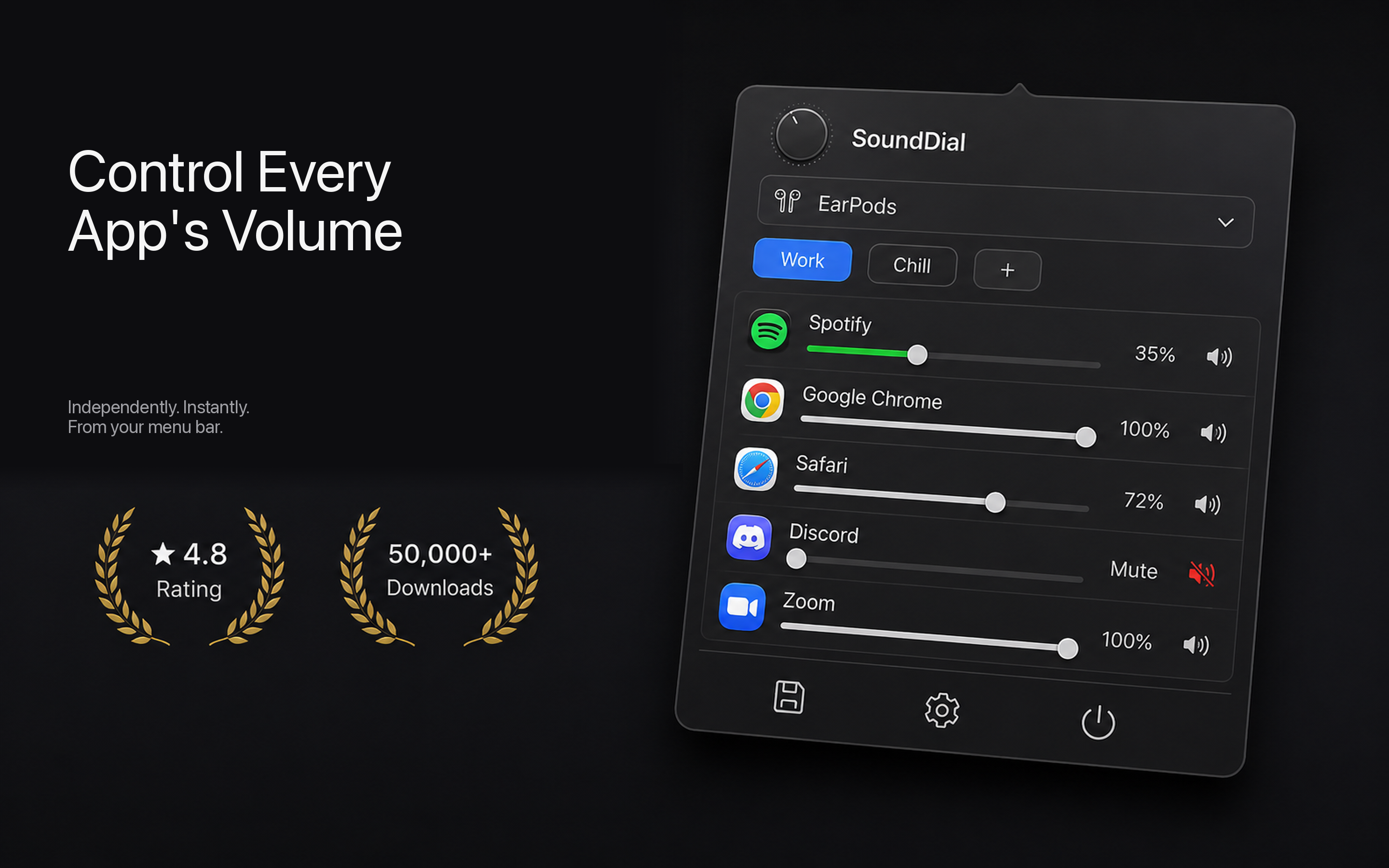
Håndtering af lydkvalitet med SoundDial
Selvom SoundDial ikke direkte løser hardware- eller systemniveau-knitren, kan det hjælpe dig med at styre lyden på måder, der mindsker problemet:
- Reducer konkurrerende lydkilder: Brug SoundDial til at slå fra for apps, du ikke aktivt bruger. Færre samtidige lydstrømme betyder mindre CPU-pres på lydbehandlingen.
- Volumenboost i stedet for systemmax: Hvis du kører systemvolumen på 100% og stadig presser apps højere, arbejder lydstien på sit yderste niveau. Anvendelse SoundDial Boost pr. app for at forstærke specifikke apps til 200%, mens systemvolumen holdes på en mere behagelig 70-80%. Dette kan reducere forvrængning på systemets udgangsniveau.
- Hurtig udskiftning af outputenhed: Hvis knitring er relateret til en bestemt outputenhed, lader SoundDial dig skifte enheder fra menupanelet uden at rode i Systemindstillinger.
Få SoundDial på Mac App Store — €14,99 engangskøb, ingen abonnement, macOS 14,2+.