Du er på et videoopkald. Slack bliver ved med at dinge. Der spiller musik i baggrunden. Du rækker ud efter lydstyrken, og — alt bliver mere stille. Opkaldet, musikken, notifikationerne. macOS har præcis én volumenskyder, og den styrer alt på én gang.
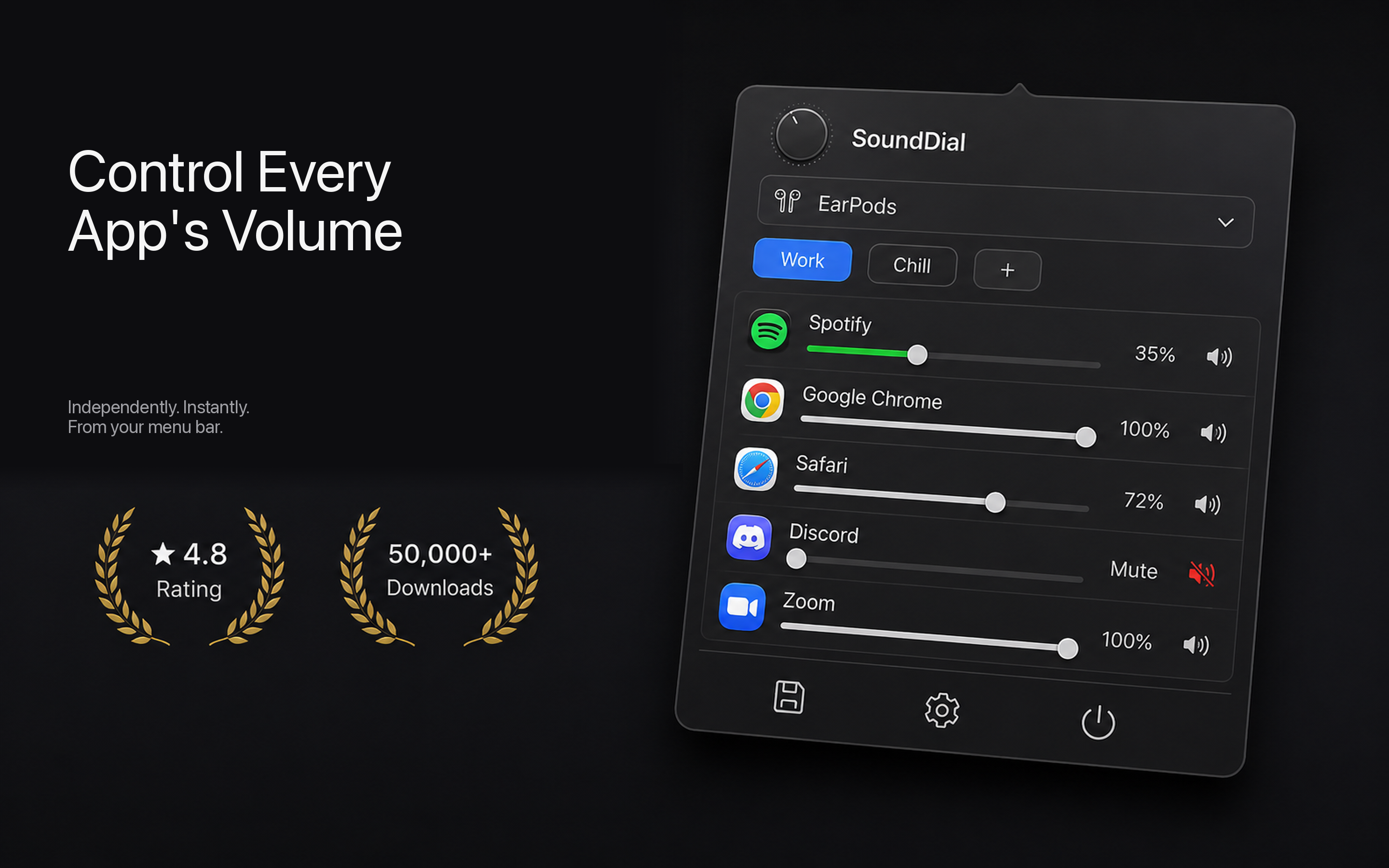
Windows har haft en volumenmixer pr. app siden Vista i 2006. Tyve år senere gør macOS stadig ikke. Hvis du vil skrue ned for Spotify uden at påvirke dit Zoom-opkald, har Apple ikke noget indbygget svar til dig.
Denne guide forklarer, hvad lydstyrkekontrol per app er, hvorfor macOS ikke har det, og hvordan man får det.
Hvad per-app-volumen egentlig betyder
Volumen pr. app betyder, at hver applikation på din Mac får sin egen uafhængige volumen-slider. Du kan sætte Spotify til 30 %, holde Zoom på 100 %, slå Slack helt fra og lade Safari stå på 50 % — alt sammen på samme tid. At ændre én apps lydstyrke har ingen effekt på nogen anden app.
Dette adskiller sig fra systemvolumen, som er en enkelt master-slider, der skalerer alt proportionalt. Hvis dit systemvolumen er på 50%, og Spotify spiller på fuld styrke, er der ingen måde kun at skrue ned for Spotify uden en mixer per app.
Hvorfor macOS ikke inkluderer dette
Apples lydarkitektur (Core Audio) understøtter absolut lydstyrkekontrol pr. app på framework-niveau. Grunden til, at macOS ikke viser det i brugerfladen, er et designfilosofivalg: Apple foretrækker færre kontroller og en enklere overflade. En skyder er enklere end tolv.
Problemet er, at "simplere" holder op med at være simplere, så snart du har mere end én lydkilde, der konkurrerer om din opmærksomhed. En enkelt volumentast, der styrer alt, er elegant, når du laver én ting. Det er aktivt fjendtligt, når du er på et opkald med musik og notifikationer på samme tid — hvilket faktisk er sådan, de fleste bruger deres Mac.
De indbyggede løsninger (og hvorfor de ikke virker)
1. Lydstyrkekontroller i appen
Nogle apps har deres egne lydstyrkeskydere — Spotify, VLC, QuickTime. Men de fleste gør ikke. Slack gør ikke. Chrome-faner gør ikke. Systemlyde gør ikke. Og selv når en app har en skyder, skal du åbne appen, finde skydeknappen, justere den og så skifte tilbage til det, du lavede. Det er fem klik for noget, der burde være ét.
2. Audio MIDI-opsætning
macOS inkluderer Audio MIDI Setup i Værktøjsmappen. Den lader dig konfigurere lydenheder og oprette aggregerede enheder, men den har ingen lydstyrkekontroller pr. app. Det er et værktøj til enhedskonfiguration, ikke en mixer.
3. Flere outputenheder
Du kunne teoretisk set sende forskellige apps til forskellige output-enheder (hovedtelefoner vs. højttalere) og styre disse enheder separat. Men det kræver ekstra hardware, manuel routing pr. app, og giver dig faktisk ikke uafhængigt volumen — kun uafhængig tænd/sluk pr. enhed.
Sådan fungerer en volumenmixer per app
En ordentlig volumenmixer pr. app sidder i menulinjen og viser alle apps, der i øjeblikket producerer lyd. Hver app har sin egen skyder. Du trækker den op eller ned, og kun appens lydstyrke ændrer sig. Systemvolumen forbliver uændret.
Under motorhjelmen virker det ved at bruge macOS's Core Audio Tap API (introduceret i macOS 14) eller ældre virtuelle lydenhedsteknikker til at opfange hver apps lydstrøm uafhængigt og skalere dens amplitude, før den når højttalerne.
De vigtigste funktioner, der adskiller en god mixer fra en dårlig:
- Realtids app-detektion. Når en ny app begynder at afspille lyd, burde den automatisk dukke op i mixeren. Ingen manuel opsætning.
- Mute per app. Ét klik for at slå en bestemt app fra uden at røre dens skyderposition.
- Volumenforøgelse. Nogle apps (jeg kigger på dig, stille podcast-afspillere) maxer for lavt. En god mixer lader dig booste over 100%.
- Profiler. Forskellige lydstyrkeindstillinger til forskellige situationer — "Focus" med alt andet fra lydløs undtagen musik, "Møde" med Zoom på 100% og alt andet på 20%, "Gaming" med spillyd forstærket.
- Auto-ducking. Sænk automatisk musikken, når du starter et opkald, og sæt det tilbage, når opkaldet slutter. Det alene er hele ansøgningen værd.
- Menubaren er native. Den burde ligge i menulinjen, ikke i et dock-vindue. Du kigger op, justerer dig og går tilbage til arbejdet. Ingen app-skift.
Hvem har brug for det her
Alle, der laver mere end én lydting ad gangen. Det gælder de fleste, men især:
- Fjernarbejdere — opkald + musik + notifikationer er den mest almindelige kollision
- Streamere og podcastere — præcis kontrol over, hvad publikum hører, kontra hvad du hører
- Musikere og producenter — skal isolere DAW-output fra referencespor og kommunikationsværktøjer
- Gamere — spillyd vs. Discord vs. musik er en konstant balancegang
- Alle med notifikationstræthed — mute Slack, behold alt andet
SoundDial
Jeg byggede SoundDial fordi den Mac volumenmixer, jeg ønskede, ikke eksisterede. Den ligger i din menulinje, viser alle apps, der laver lyd, og giver hver enkelt sin egen skyder. Lydløs per app, lydstyrkeforøgelse, profiler og automatisk ducking, der sænker din musik, når et opkald starter. Engangskøb, macOS 14+, ingen abonnement.
Volumenmixeren macOS burde have indbygget.