You're studying a language on your Mac. Anki is playing pronunciation audio for flashcards. A podcast in your target language is running in the background for immersion. You open a YouTube grammar lesson in the browser. Now three audio sources are playing simultaneously, all at different natural volumes, and macOS gives you one slider to control all of them. The Anki pronunciation clips are too quiet to catch, the podcast is too loud, and the YouTube video is somewhere in between.
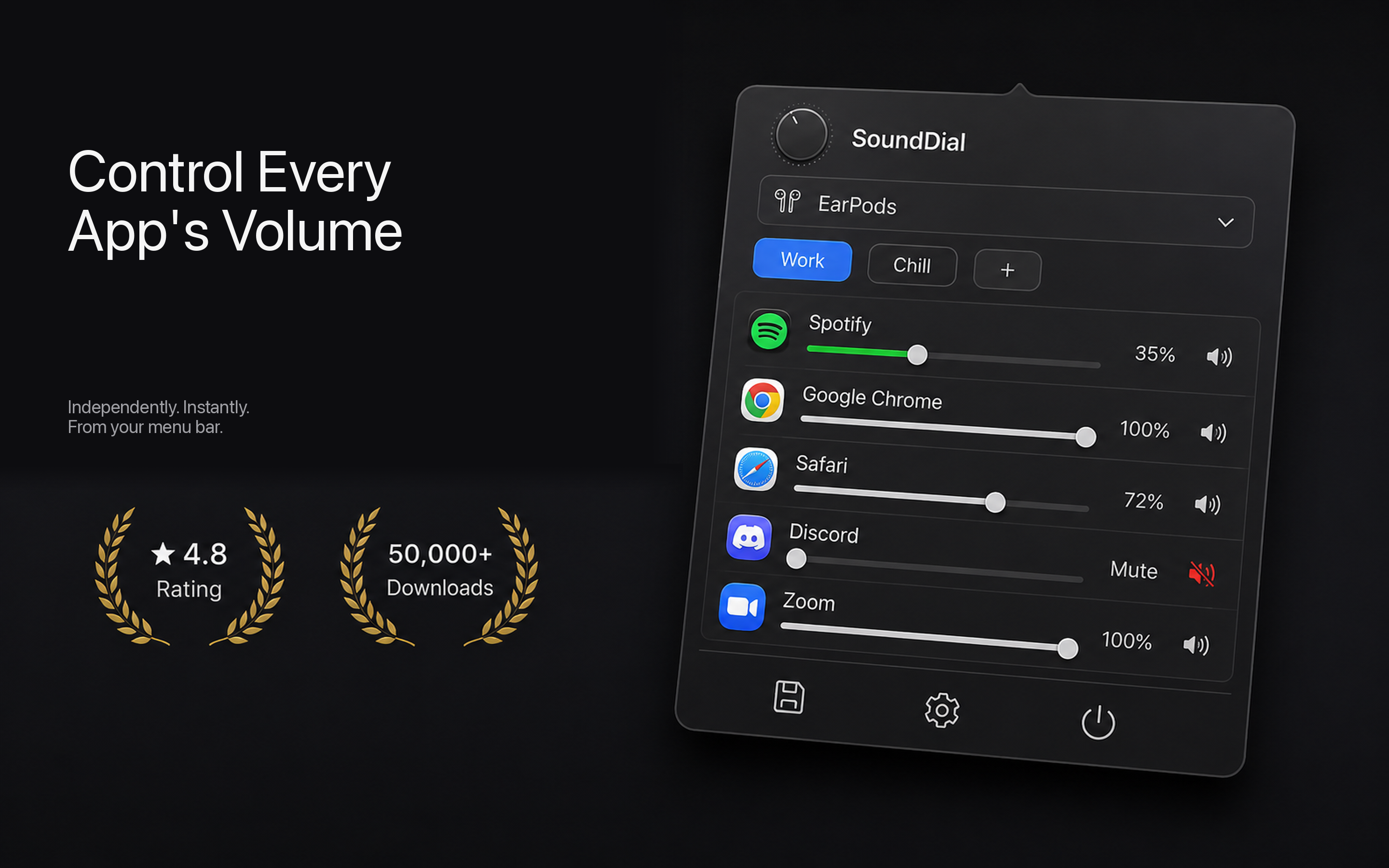
The language learner's audio mess
Language learning involves multiple audio sources by nature. Flashcard apps play short clips. Podcast apps stream continuous audio. Video lessons mix speech with music and sound effects. Dictionary apps pronounce words on demand. Each source has its own internal volume level, and they're never calibrated to match each other.
The usual workaround is to pause everything except what you're actively using. But that defeats the "immersion background" approach many learners rely on — keeping target language audio playing softly while doing other study activities.
Layered audio for language study
SoundDial lets you set each app to its ideal level and keep multiple sources running in a comfortable mix.
Study profile
- Anki: 100% (boosted if clips are quiet) — pronunciation must be crystal clear
- Podcast app: 20-30% — soft background immersion, not competing with active study
- Browser (YouTube lessons): 80% — clear when you're watching, easy to lower when reviewing cards
- Dictionary app: 90% — word pronunciations audible on demand
- Slack / Messages: muted — study time means study time
Immersion mode
- Podcast / radio stream: 60% — comfortable listening level
- Everything else: muted or very low
Switch between profiles as you move from active study to passive immersion. Your audio environment adapts to your learning mode without manual slider adjustments each time.
Get SoundDial on the Mac App Store — €14.99 one-time purchase, no subscription, macOS 14.2+.