Distansarbete på en Mac innebär att din dator samtidigt är din kontorstelefon, din radio, ditt notiscenter och din djuparbetsstation. Det är fyra fundamentalt olika ljud-lägen, och macOS behandlar dem alla likadant: ett volymreglage, allt på samma nivå, inget sätt att prioritera.
Den här guiden går igenom hur du konfigurerar din Mac:s ljud för distansarbete så att samtal är tydliga, musik är närvarande men inte distraherande, notiser är subtila och fokustid faktiskt är tyst.
De fyra ljud-lägena för distansarbete
1. Mötesläge
Du är i ett Zoom- eller Teams-samtal. Samtalet måste vara kristallklart. Musik bör vara tyst eller knappt hörbar. Slack bör inte pinga i ditt öra.
2. Fokusläge
Du gör djuparbete. Bakgrundsmusik på en låg nivå hjälper dig att koncentrera dig. Notiser bör vara knappt märkbara – närvarande nog att du märker ett brådskande meddelande, tyst nog att de inte bryter flödet.
3. Samarbetsläge
Du är tillgänglig för meddelanden, övervakar Slack, kanske tittar på en träningsvideo. Allt kan vara på måttliga nivåer. Notiser på normal volym.
4. Pausläge
Musik på full volym. YouTube på full volym. Notiser kan vänta.
Hårdvarukonfiguration
Mikrofonfrågan
Om du använder AirPods för samtal, överväg att använda en separat mikrofon istället. När AirPods används som både mikrofon och högtalare växlar macOS till den lägre kvalitets-SCO Bluetooth-kodeken, vilket minskar både ljudkvalitet och volym. Att använda din Macs inbyggda mikrofon (eller en USB-mikrofon) medan du behåller AirPods som utdata undviker detta helt.
Utdataenheter
Många distansarbetare använder två utdataenheter:
- Hörlurar för samtal – integritet, inget eko, tydligt ljud
- Högtalare för musik under icke-samtalstid – fyller rummet, bekvämare under långa perioder
Använd Option-klick på Ljud-ikonen i menyfältet för att snabbt byta mellan enheter. Eller använd SoundDials inbyggda enhetsväxlare, som placerar dina utdataenheter precis bredvid dina volymkontroller.
Programvarukonfiguration
Notishantering
Gå till Systeminställningar → Notiser. För varje app, bestäm om du behöver ljud-notiser:
- Behåll ljud på: Slack (om du svarar), Kalender (möten), Meddelanden
- Stäng av ljud: Mail (kontrollera enligt schema), Nyheter, sociala appar
Det minskar antalet appar som gör överraskningsljud, men ger dig inte volymkontroll – bara på/av.
Det saknade: per-app-volymkontroll
Fokuslägen styr vilka notiser som passerar men inte hur höga något är. Du har fortfarande ett volymreglage för allt. Om du vill ha Slack på 15 %, Spotify på 35 % och Zoom på 100 % – kan macOS inte göra det.
SoundDial fyller detta gap genom att ge varje app sitt eget volymreglage.
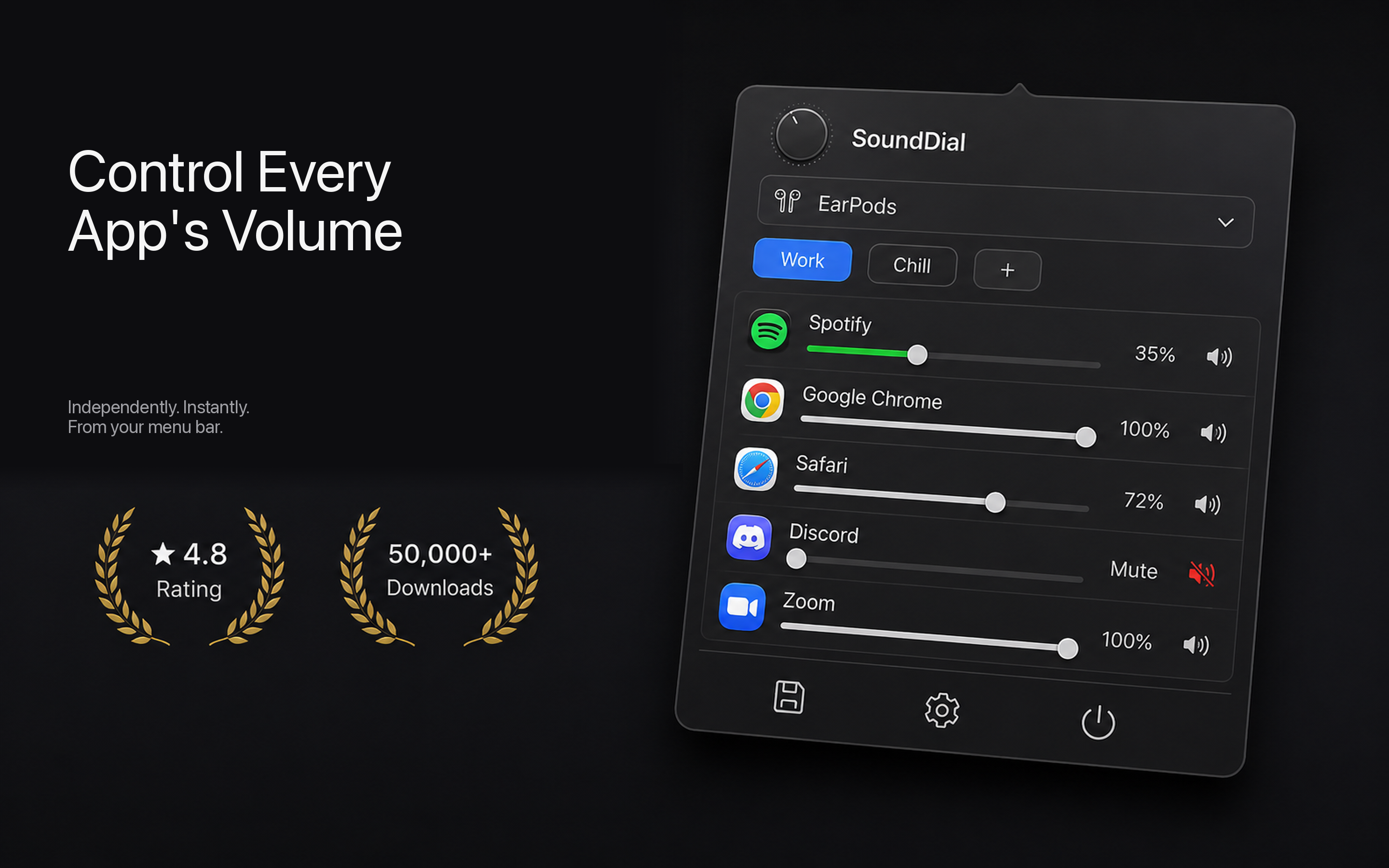
Spara profiler för varje läge
Mötesprofil:
- Zoom/Teams: 100 %
- Spotify: tystat
- Slack: tystat
- Webbläsaren: tystat
Fokusarbete-profil:
- Spotify: 30 %
- Slack: 10 %
- Zoom: 80 % (ifall någon ringer)
- Webbläsaren: 40 %
Samarbetsprofil:
- Allt på 50–70 %
- Slack: 30 %
Byt mellan profiler med ett klick. När ett samtal startar sänker SoundDials auto-ducking automatiskt allt utom din samtalsapp. När det slutar återställs dina profilnivåer.
Det dagliga arbetsflödet
- Börja arbeta → tillämpa "Fokusarbete"-profil
- Anslut till ett möte → auto-ducking hanterar det automatiskt (eller tillämpa "Möte"-profil)
- Mötet slutar → volymer återställs till Fokusarbete-nivåer
- Lunchpaus → tillämpa "Paus"-profil, höj musiken
- Eftermiddagens djuparbete → tillbaka till Fokusarbete
Total manuell insats: två eller tre profilklick per dag. Allt annat är automatiskt.
Hämta SoundDial i Mac App Store – 14,99 € engångsköp, ingen prenumeration, macOS 14.2+.