JSON gets all the attention, but plenty of systems still speak XML — SOAP APIs, Android layout files, Maven's pom.xml, RSS feeds, and no shortage of enterprise integrations that have not changed their data format in fifteen years. When one of these arrives minified into a single line, reading the nested structure is genuinely difficult without proper indentation.
Unlike JSON, XML also has to deal with namespaces, attributes, and self-closing tags, which makes manual formatting even more error-prone. Miscounting nesting levels in a deeply structured SOAP envelope is easy to do and hard to notice until something downstream breaks.
Why This Still Matters in 2026
Despite JSON's dominance in new API design, XML has not gone anywhere in enterprise software, government systems, and Android development. If you integrate with a bank's payment gateway, a legacy insurance system, or an older SOAP-based web service, you will eventually need to read and debug raw XML — and squinting at an unformatted response is not a productive way to spend that time.
Format and Validate in One Pass
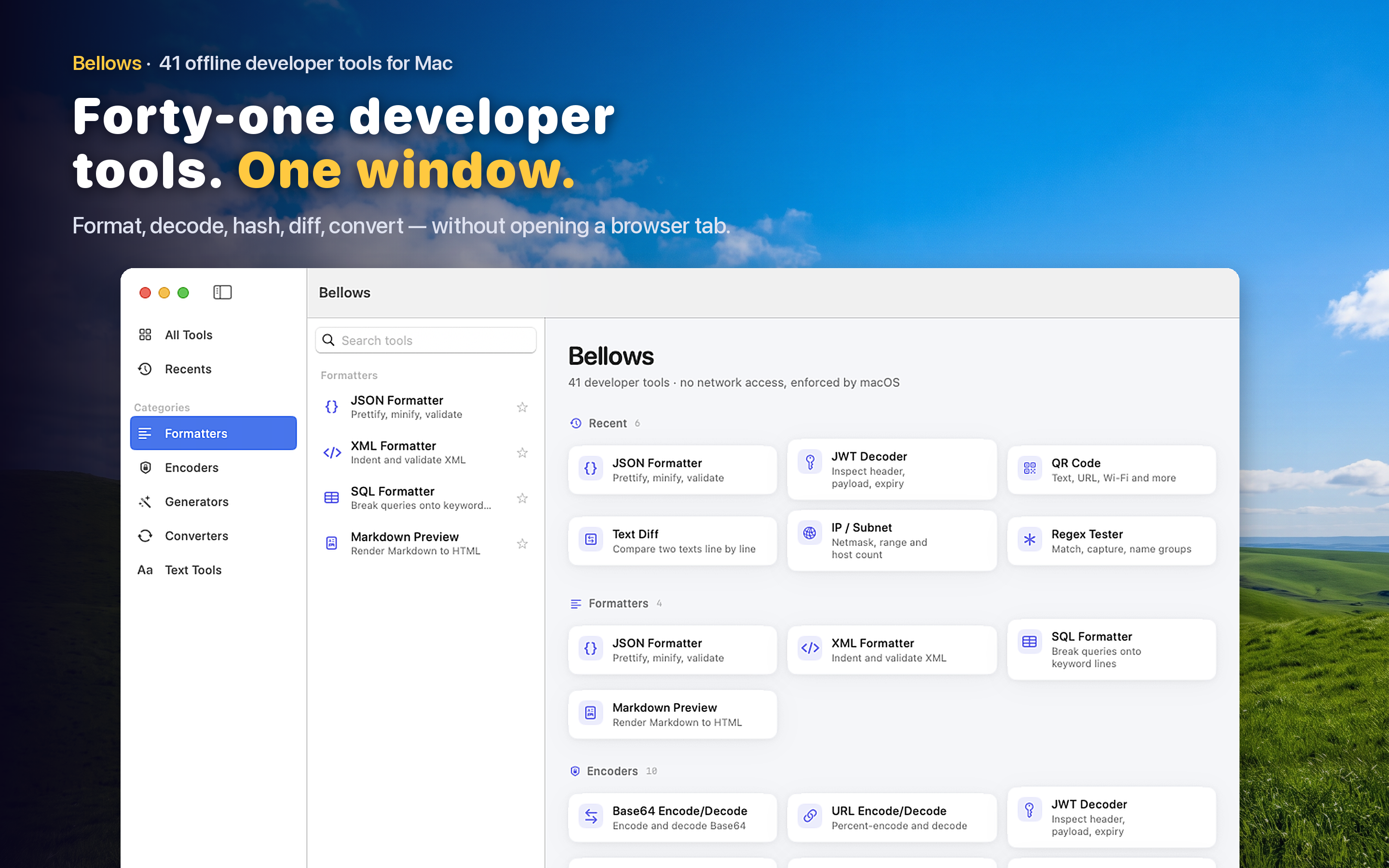
Bellows includes an XML formatter that indents nested elements properly and flags malformed markup — an unclosed tag, a mismatched attribute quote, a broken namespace declaration. Paste minified XML and get a readable, properly indented document back immediately.
Debugging SOAP and Legacy APIs
SOAP envelopes wrap the actual payload in several layers of boilerplate, which makes finding the field you actually care about tedious when everything is on one line. Formatting the response first turns a wall of text into a navigable tree.
Reviewing Config and Build Files
Android's AndroidManifest.xml, Maven's pom.xml, and countless CI configuration formats are XML under the hood. When one of these gets generated or modified programmatically and ends up unindented, a quick format pass makes the diff and the content both easier to review.