אתם מסטרימים על Mac עם OBS. שמע המשחק שלכם מתפוצץ. שיחת Discord שלכם פועלת. Spotify מנגן מוזיקת רקע. צלילי התראות מופעלים כשמישהו נרשם. הצופים שומעים את כל זה באותה עוצמה — בלגן כאוטי שבו קריאות Discord מתחרות עם פיצוצים והמוזיקה מטביעה את הפרשנות שלכם.
הבעיה המרכזית: ל-macOS יש פלט שמע אחד, ו-OBS לוכד אותו כזרם משולב אחד. אינכם יכולים להגיד ל-OBS "לכוד את המשחק ב-40%, Discord ב-80%, ו-Spotify ב-20%" כי macOS לא מפריד ביניהם.
בעיית שמע הסטרימינג על Mac
ב-Windows, OBS יכול ללכוד שמע יישום בודד באופן מקורי. על Mac, זה לא מובנה. OBS על macOS יכול ללכוד:
- שמע שולחן עבודה — הכל שמתנגן על Mac שלכם, משולב לזרם אחד
- מיקרופון/עזר — קלט המיקרופון שלכם
- לכידת שמע יישום (macOS 13+) — לכידת שמע אפליקציה ספציפית, אבל ההגדרה ידנית ומוגבלת
הגישה הפשוטה יותר: שלטו ברמות לפני ש-OBS לוכד אותן
במקום לנסות להפריד שמע בתוך OBS, שלטו בעוצמת כל אפליקציה לפני שהיא מגיעה ללכידת שמע שולחן העבודה של OBS. אם אתם מורידים את Spotify ל-20% ומגבירים Discord ל-90% ברמת המערכת, לכידת שמע שולחן העבודה של OBS קולטת את המיקס המאוזן כבר.
זה בדיוק מה ש-SoundDial עושה. הגדירו כל אפליקציה לרמה שאתם רוצים שהצופים ישמעו:
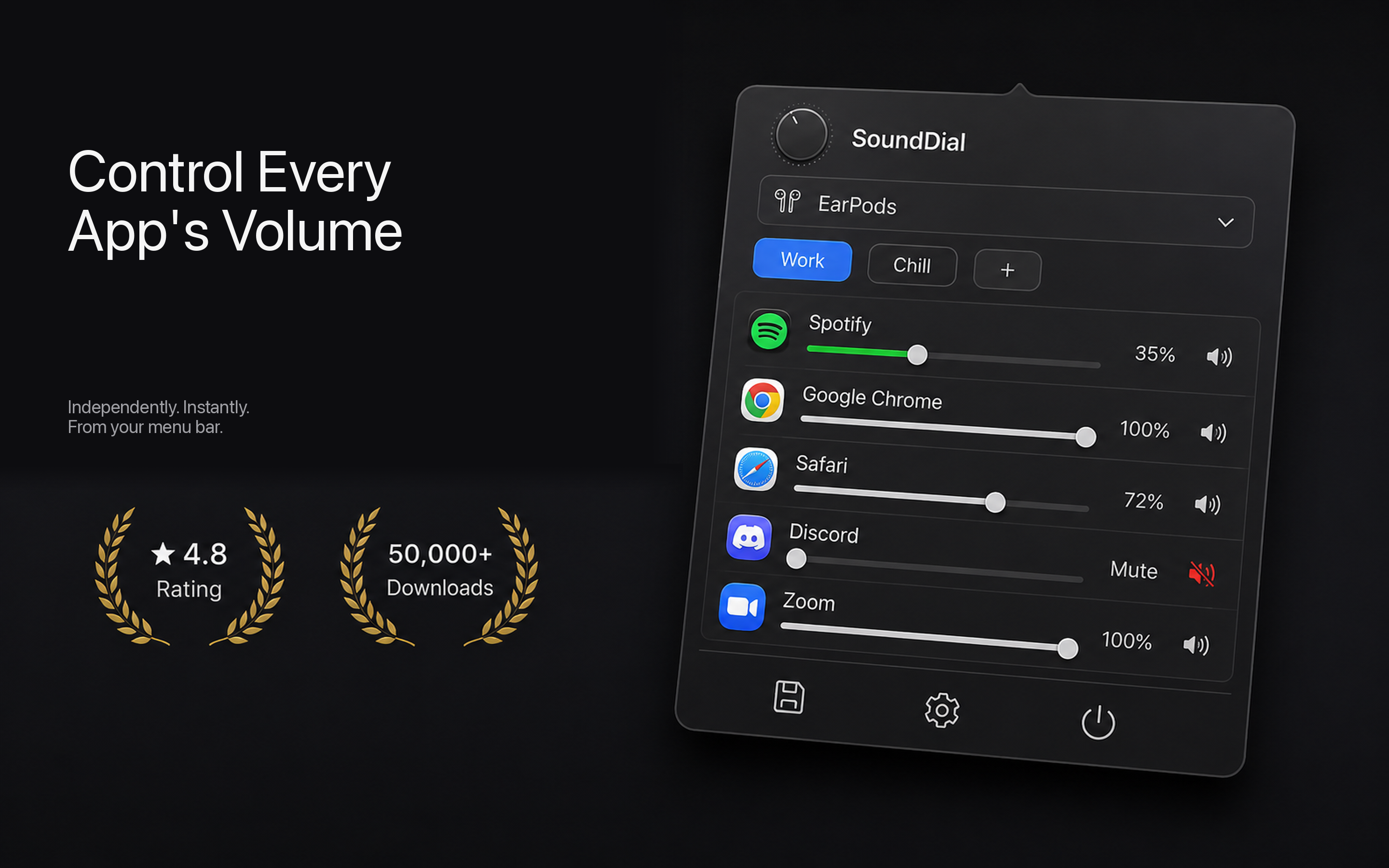
הגדרת שמע סטרימינג טיפוסית
- משחק: 50% — נוכח אבל לא מסחרר
- Discord / צ'אט קולי: 80% — קריאות ברורות מהצוות שלכם
- Spotify / מוזיקה: 15% — אווירת רקע עדינה
- התראות סטרים (דפדפן): 40% — נשמע אבל לא מפחיד
- Slack / התראות: מושתק — הצופים לא צריכים לשמוע את ה-DM שלכם
שמרו כפרופיל "סטרימינג"
שמרו תצורה זו כפרופיל עוצמה ב-SoundDial. לפני שאתם עולים לשידור חי, החילו את פרופיל ה"סטרימינג" בלחיצה אחת. כל אפליקציה קופצת לרמה המותאמת לסטרימינג שלה.
מה אתם שומעים לעומת מה הצופים שומעים
עם SoundDial שמכוונן עוצמה לכל אפליקציה ברמת המערכת, גם אתם וגם הצופים שומעים את אותו מיקס מאוזן. זה פשוט יותר מלנסות לשמור מיקסים נפרדים — אחד לכם ואחד לסטרים — מה שדורש התקני שמע וירטואליים וניתוב מורכב שרופף על Mac.
מדוע שליטה לכל אפליקציה עדיפה על מיקסינג רק ב-OBS
- כיוונונים מיידיים: במהלך הסטרים, צופה אומר שהמשחק חזק מדי. לחצו על שורת התפריט, גררו פס הזזה אחד. סיום.
- עובד מחוץ ל-OBS: הגדרת השמע המאוזנת שלכם עובדת גם כשאינכם מסטרימים.
- ללא התקני שמע וירטואליים: SoundDial משתמש ב-Audio Tap API המקורי של Apple — ללא Soundflower, ללא BlackHole, ללא מנהלים שנשברים בעדכוני macOS.
זמין ב-Mac App Store — נסקר על ידי Apple, רכישה חד-פעמית של €14.99, ללא מנוי, macOS 14.2+.