You tell your calendar a task will take 30 minutes. It takes 75. This happens constantly because most time estimates are optimistic guesses rather than measurements, and without actually timing yourself, there's no feedback loop to correct them. Over weeks and months, chronically wrong estimates compound into a schedule that never quite adds up.
The fix isn't a better estimating technique — it's data. Time a handful of recurring tasks for a week or two and you'll know, not guess, how long they actually take.
Why people don't time themselves
Starting a stopwatch or timer for every small task sounds like more overhead than the insight is worth, especially if it means opening an app and configuring it each time. In practice, most people give up on self-timing within a day or two simply because the friction of starting the timer outweighs their curiosity about the result.
The fix: Tickpull
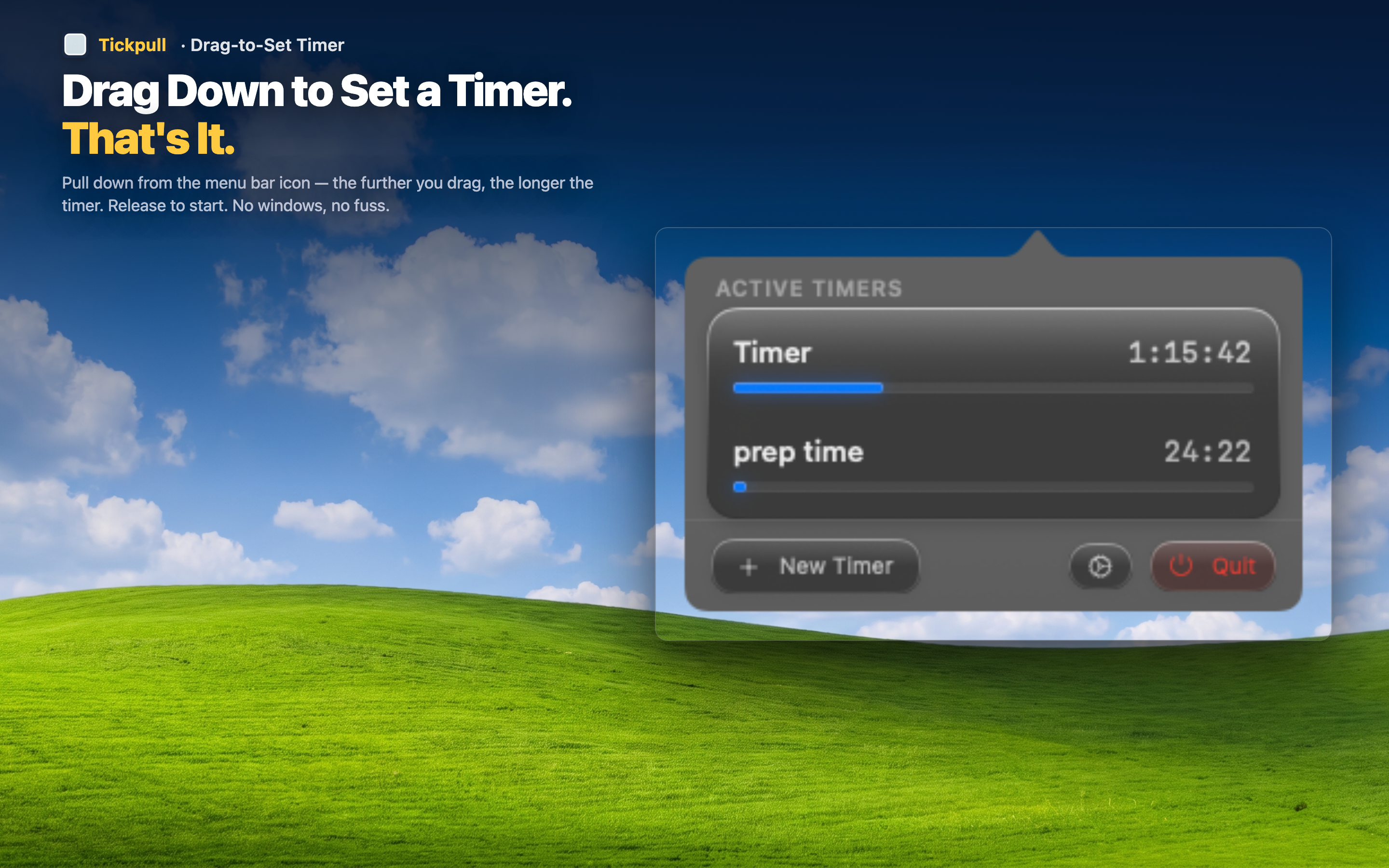
Tickpull lowers that friction to a single drag. Before starting a task, drag to a rough estimate and release — the ring counts down, and if you finish before or after it completes, you immediately know the gap between your estimate and reality.
Email and admin work
Set a 15-minute timer before opening your inbox. If the ring finishes before you're done, you've just measured that "quick email check" actually needs 25 minutes — useful information for scheduling it honestly next time.
Recurring client or freelance tasks
If you bill or plan around task duration, running a timer during a task type a few times gives you an honest average instead of a number you made up when you first quoted it.
Calibrating your calendar
After a week of timing your most common tasks, you'll have real numbers to plug into how you block your calendar — turning guesswork into a schedule that actually holds up.