A teaching day is made up of dozens of small time blocks: 8 minutes for a warm-up, 40 minutes for a test, 3 minutes to clean up before the bell. Fumbling with a timer app between each of these eats into instructional time, and a classroom computer is often projected on a screen for the whole room to see — which means the timer itself becomes part of the display, for better or worse.
Students also respond to a visible countdown in ways a verbal "you have five minutes left" doesn't achieve on its own. Seeing time run out creates its own gentle pressure to wrap up.
Why classroom timer tools often miss the mark
Many "classroom timer" web tools are built to be projected full-screen, which works for whole-class activities but is useless the moment the teacher needs to reference notes or a slideshow on the same screen. Others are slow to configure between activities, costing valuable minutes across a day with many short transitions.
The fix: Tickpull
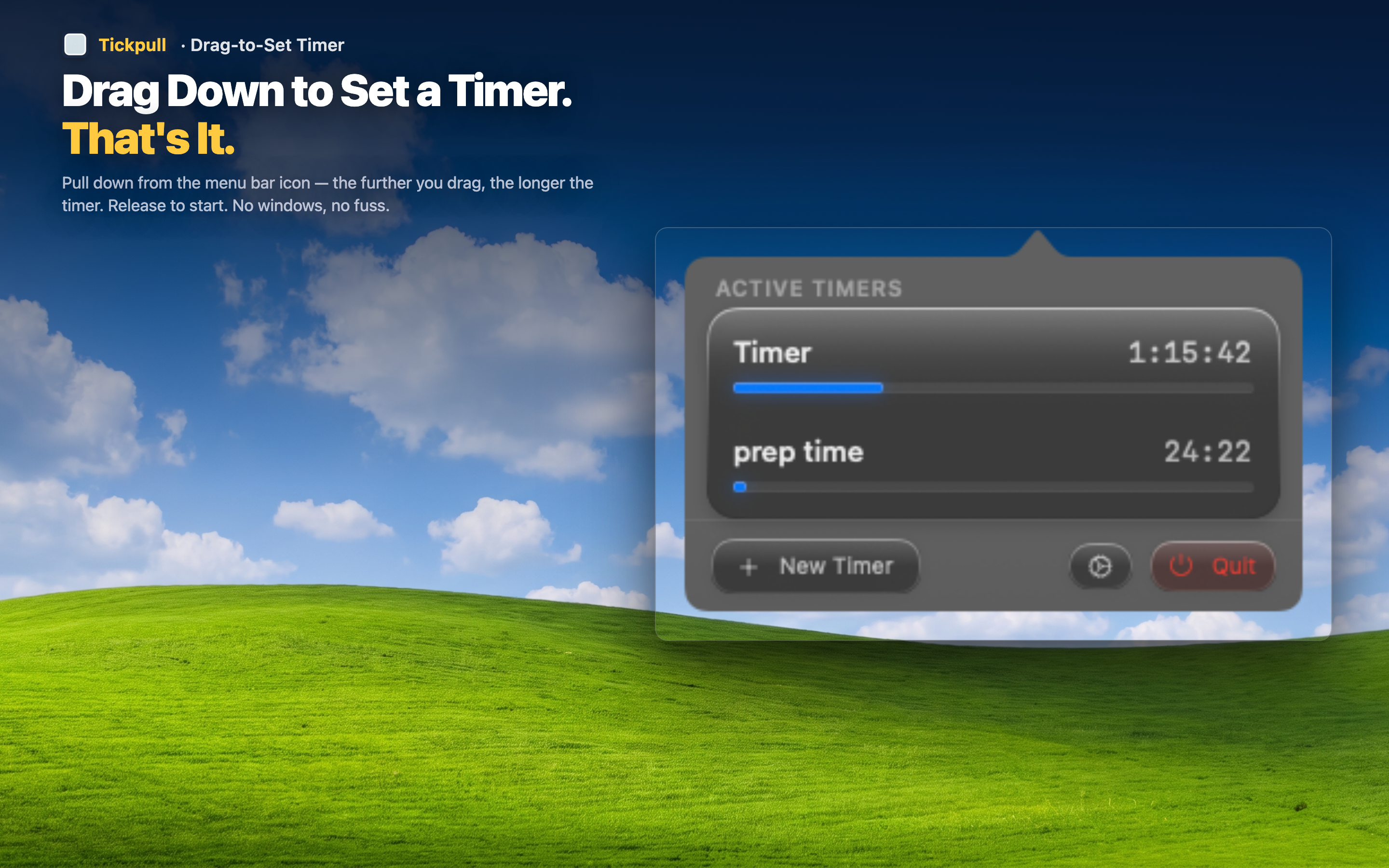
Tickpull stays out of the way in the menu bar rather than taking over the display, which means it works alongside slides, documents, or a gradebook without competing for screen space. Setting a new duration between activities is a single drag.
Timed exams and quizzes
Set the timer to match the test length once at the start of class, then teach or supervise without needing to keep mentally tracking the clock yourself.
Activity and group work transitions
A quick 10-minute drag for group discussion, then a fresh drag for the next segment. Restarting between activities takes seconds rather than the multiple steps of a scroll-wheel timer.
End-of-class cleanup windows
A short 3- to 5-minute timer before the bell gives students a visible cue to start wrapping up materials, reducing the last-minute scramble when the bell actually rings.