Search the Mac App Store for a timer app and a surprising number of results ask for a monthly or yearly subscription before you can set more than one countdown. A timer has no ongoing cost to the developer once it's built — no server calls, no data syncing requirement, no content that needs refreshing. Charging a recurring fee for something this simple feels disconnected from what the app actually does.
It's a reasonable thing to want: a timer that you install once and own, the same way a physical kitchen timer isn't billed monthly.
Why so many timer apps default to subscriptions
Subscription pricing has become the default model across the App Store because it produces more predictable revenue than one-time purchases, regardless of whether the underlying feature set justifies recurring billing. For a utility as small as a timer, that mismatch is especially obvious — you're often paying monthly to unlock a second concurrent timer or remove an ad banner.
The fix: Tickpull
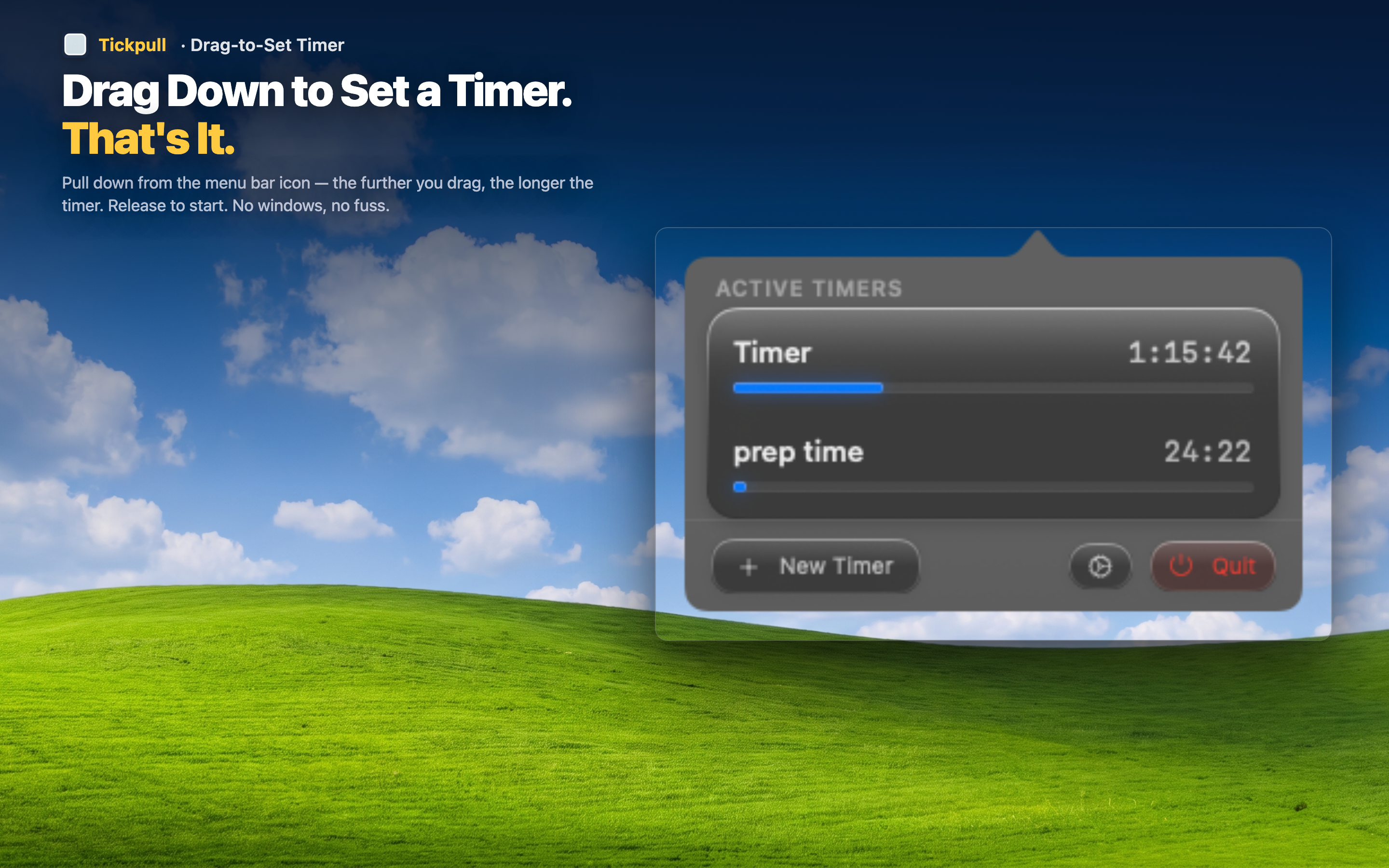
Tickpull is a straightforward menu bar app: drag to set a duration, release to start, watch the ring fill, get notified with a haptic tap when it's done. Multiple parallel timers are part of the core app, not a feature gated behind a monthly plan.
A utility that behaves like a utility
You install it, it sits in your menu bar, and it does one job well. There's no account to create, no sync service running in the background, and nothing tied to a login.
Multiple timers included
Running two or three parallel countdowns is a baseline capability, not an upsell. If you need more than one timer running at once, that's simply how the app works.
No recurring reminder to cancel
There's no renewal date to track, no reminder to cancel before you get billed again for a feature you use for a few seconds at a time.