Direct answer
A private browser can avoid keeping ordinary local history, cookies, and open tabs from a session, especially when it runs inside a locked vault. It does not make activity invisible to websites, accounts, network providers, employers, routers, downloads, or screenshots.
What matters in this situation
Browsing privacy has separate device, account, and network layers. A vault browser focuses on traces left on the phone. Signing into a dating site still creates account-side history, and downloading a photo creates a file that must be protected separately. A work or managed network may retain its own logs.
- local browser history
- dating websites
- account activity
- network logs
- downloaded files
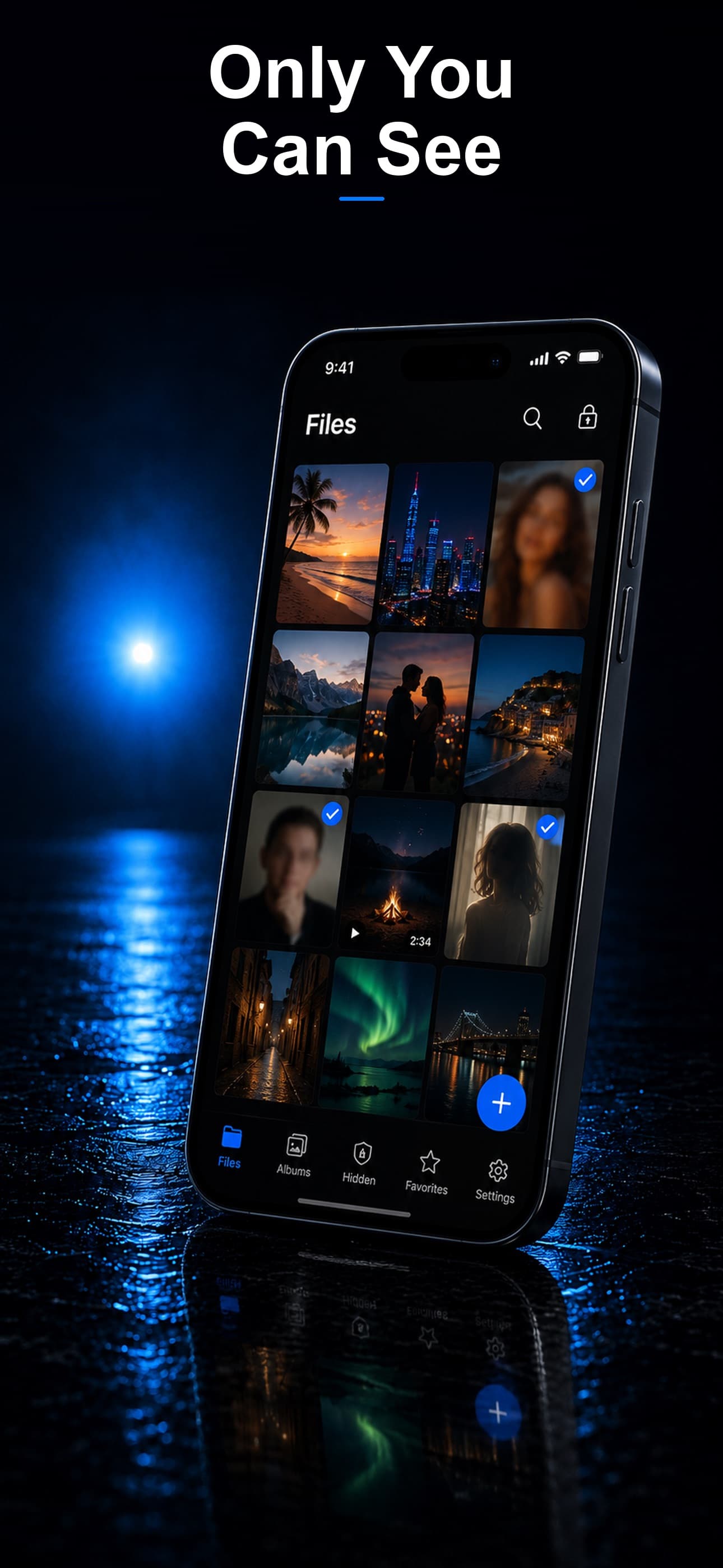
What Stash can actually protect
Stash protects files you deliberately import into its encrypted vault. For an affair or discreet relationship, that can include:
- Intimate photos and videos removed from the ordinary camera roll after the import is verified.
- Screenshots of conversations, dating profiles, travel plans, receipts, gifts, and reservations.
- Exported chats, voice notes, PDFs, documents, and downloaded attachments.
- A harmless second content space using a decoy PIN, plus records of failed PIN attempts.
A practical privacy process
- Import sensitive files into Stash and open several inside the vault to confirm that photos display and videos play correctly.
- Only after verification, remove source copies from Photos or Files and review Recently Deleted.
- Use a vault PIN that is different from the iPhone passcode and cannot be guessed from birthdays or anniversaries.
- Choose a calculator, fitness, or music disguise that looks normal among the apps already on the phone.
- Review iCloud, shared albums, downloads, message attachments, and other synced devices separately.
What a file vault does not hide
No vault app makes cheating invisible. Most discoveries happen through information outside the protected file:
- Lock-screen notifications, live messages, call logs, contacts, and shared calendars.
- Dating-app icons, App Store purchase history, subscriptions, Screen Time, and battery usage.
- iCloud Photos, Google Photos, shared libraries, backups, Macs, iPads, and family devices.
- Location sharing, tagged posts, card statements, ride history, hotel emails, and another person's phone.
The relationship and safety reality
Encryption can protect selected files; it does not remove the personal consequences of infidelity. If discovery could lead to violence, coercive control, outing, or homelessness, prioritize a wider safety plan and trusted professional support. A private vault is one technical layer, not protection for an entire situation.
Frequently asked questions
Does private browsing hide dating-site activity from my spouse?
It can reduce local browser traces, but account records, notifications, downloads, network logs, and other devices may still reveal activity.
Does a vault browser replace a VPN?
No. A vault browser protects local device traces; a VPN addresses a different network layer and has its own trust limits.