Love and trust are the foundation of a healthy relationship. So is personal space. In an era where our phones contain our entire lives — every conversation, every search, every photo, every thought we jotted down — the question of digital privacy between partners has become one of the most nuanced topics in modern relationships. This guide approaches the subject from a place of respect, healthy boundaries, and mutual understanding.
Why Digital Privacy Matters in Relationships
Having private space on your phone is not the same as hiding something wrong. Consider these everyday scenarios:
- Planning a surprise: Searching for gift ideas, booking a surprise trip, or coordinating with friends for a birthday party.
- Personal health: Researching a medical concern you are not ready to discuss yet.
- Professional obligations: Storing confidential work documents that you are contractually prohibited from sharing.
- Personal processing: Writing journal entries, saving therapy notes, or working through thoughts you are not yet ready to share.
- Financial independence: Managing personal savings, investment accounts, or financial planning that predates the relationship.
- Friendships: Having conversations with friends that were shared in confidence and are not yours to reveal.
Every person in a relationship, no matter how close, is still an individual with their own inner life. Digital privacy protects that individuality.
The Problem with Total Phone Transparency
Some couples adopt a "no secrets" policy that includes full phone access. While this comes from a well-intentioned place, relationship therapists widely note that total transparency can create problems:
- Erosion of trust: Paradoxically, constantly checking a partner's phone can increase anxiety rather than reduce it. If you need to verify trust by checking, the trust is not really there.
- Loss of self: Healthy relationships require two whole individuals. When every thought, search, and message is shared, the psychological space for individual identity shrinks.
- Misinterpretation: Text messages lack tone and context. A harmless conversation with a friend can look suspicious when read by someone who does not have the full picture.
- Chilling effect: When you know everything you type might be read, you start self-censoring, even with friends and family. This subtly changes who you are.
How to Have the Privacy Conversation
Talking about digital boundaries can feel uncomfortable, but it is essential. Here is a framework that relationship counselors recommend:
Start with Values, Not Rules
Instead of "I want to lock my phone," try "I value having some personal space, and I think it is healthy for both of us." Frame the conversation around mutual respect rather than restriction.
Acknowledge Feelings
If your partner feels hurt by the idea of you wanting privacy, validate that feeling before explaining your perspective. "I understand why that might feel uncomfortable, and I want you to know this is not about you or our relationship."
Set Mutual Boundaries
Privacy boundaries should apply equally. If you have a private space on your phone, your partner should feel equally entitled to theirs. Making it mutual removes the imbalance that breeds suspicion.
Distinguish Privacy from Secrecy
Privacy is "I have a personal space that is mine." Secrecy is "I am actively hiding something that affects our relationship." The difference is the potential for harm. A journal entry is private. An active deception is secret. Healthy boundaries protect the former without enabling the latter.
Practical Tools for Maintaining Digital Privacy
Once you and your partner have discussed boundaries, here are practical steps to implement them:
Use Separate Passcodes
Each partner should have their own device passcode that they do not share. This is the most basic boundary and the foundation for everything else.
Separate Cloud Accounts
Shared iCloud or Google accounts mean shared photos, messages, and browsing history. Maintain separate accounts and share specific albums or files intentionally rather than by default.
A Personal Vault
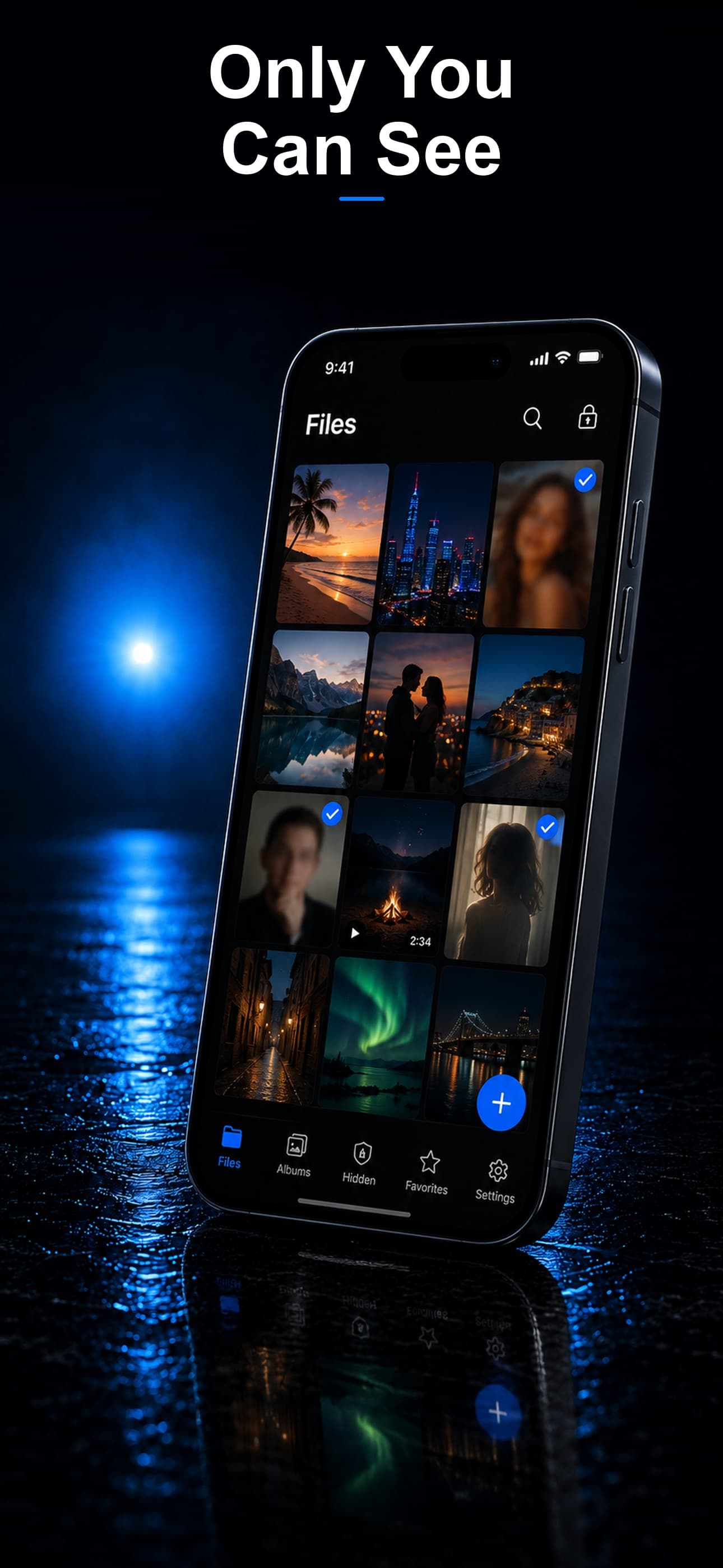
A vault app gives you a private space for photos, documents, and notes that is separate from your main phone. Apps like Stash let you store personal content behind a separate passcode, with the added benefit of app disguise so it does not even look like a vault on your home screen.
This is not about deception. It is about having a designated private space, the digital equivalent of a personal journal in a nightstand drawer. Everyone deserves one.
Separate Browser Profiles
If you share a device (like a family iPad), use separate browser profiles so your browsing history, bookmarks, and saved passwords stay separate.
When Privacy Becomes a Problem
It is important to acknowledge that privacy boundaries can be misused. If digital privacy is being used to facilitate behavior that would violate the relationship's agreed-upon boundaries, that is a relationship issue, not a privacy issue. The tool is not the problem; the behavior is.
Signs that privacy has crossed into harmful secrecy include:
- Sudden changes in phone behavior that coincide with relationship problems.
- Defensive reactions disproportionate to the situation.
- Privacy being demanded by one partner while denied to the other.
If you are experiencing these patterns, the solution is an honest conversation, potentially with the support of a couples therapist, not more surveillance.
Building Trust Through Boundaries
The strongest relationships are built on trust that does not require verification. When both partners feel secure enough to grant each other private space, it is a sign of deep mutual respect. Digital privacy, handled with openness and mutual agreement, strengthens relationships rather than threatening them.
If you are looking for a private, personal space on your device, Download Stash and create a boundary that supports both your individuality and your relationship.