The debate over encryption backdoors is one of the longest-running fights in tech policy. The U.S. government's 1993 "Clipper Chip" proposal, which would have required a government-held key for all encrypted communications, was defeated by public backlash and cryptographic research demonstrating it was insecure. The same argument resurfaces in nearly identical form every few years — most recently in the UK's Investigatory Powers Act, which has been used to demand that Apple build a backdoor into iCloud's Advanced Data Protection, and in ongoing EU "Chat Control" proposals targeting encrypted messaging.
Why Security Experts Say a Backdoor Can't Be Selective
- Math doesn't discriminate: An encryption weakness built for "authorized" law enforcement access is mathematically the same weakness a hacker, foreign intelligence service, or corrupt insider could exploit.
- Real-world precedent: The 2016 Apple–FBI case ended without Apple building a backdoor, largely because security researchers, and Apple itself, argued that any bypass mechanism could not be limited to a single device or a single request.
- Apple's actual response to the UK order: Rather than build a backdoor, Apple withdrew Advanced Data Protection (its opt-in end-to-end iCloud encryption) for UK users entirely in 2025, illustrating that "compromise" solutions to backdoor demands are rarely partial.
- Global reach of local laws: A backdoor mandated by one country's law can end up affecting users worldwide if it's built into a global product.
An App With No Door to Put a Backdoor In
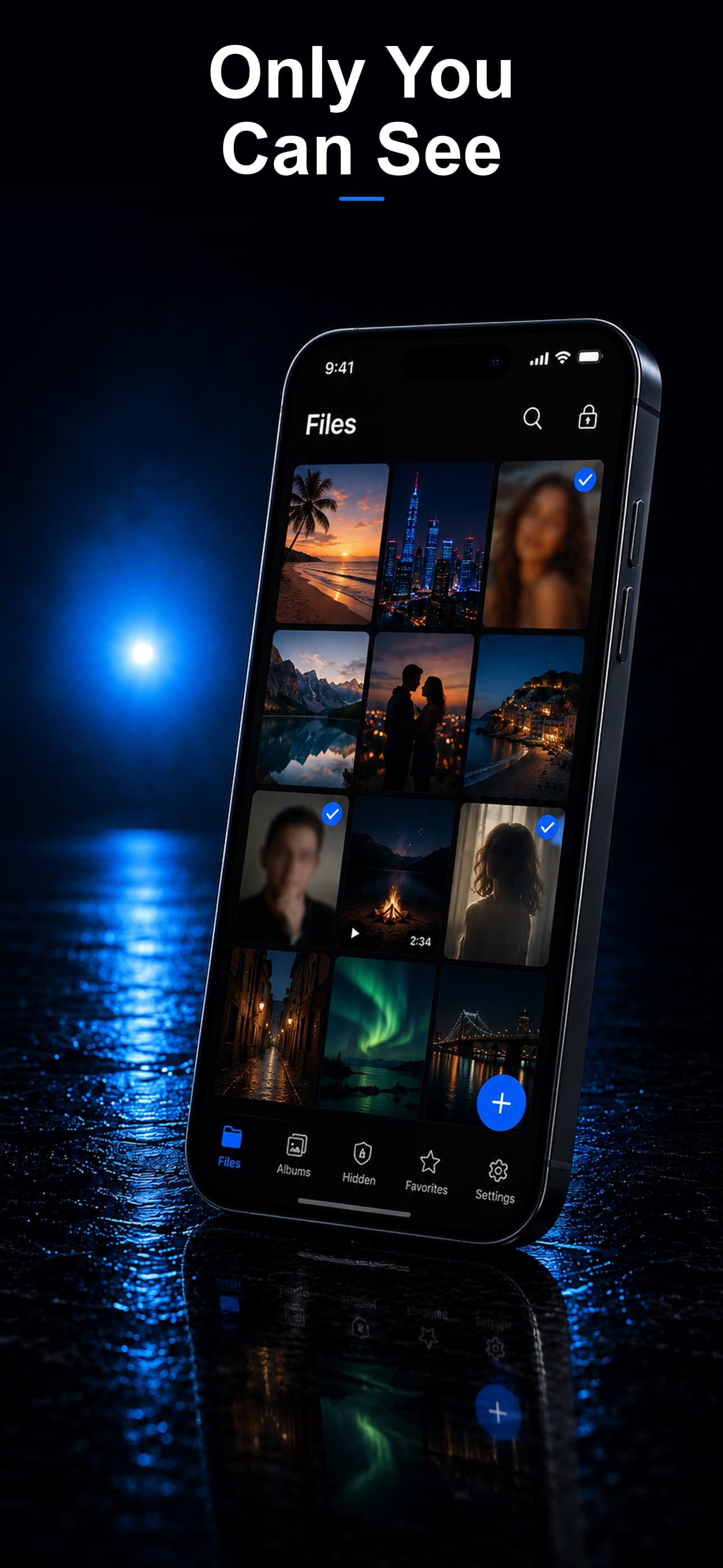
The strongest version of "no backdoor" isn't a promise — it's an architecture that makes one structurally impossible. Stash has no server, no remote access mechanism, and no key-escrow system of any kind. Files are encrypted with AES-256 using a key derived from your own passcode, generated and used entirely on your device.
What "No Remote Access" Actually Means
There is no admin panel, no account recovery system that could double as an access point, and no support mechanism that involves the developer touching your files. If you lose your passcode, there is no backdoor for Stash to use to recover it either — the same design that keeps a government out keeps everyone out, including the developer.
Auditing Any App's Backdoor Risk
Before trusting any vault app, check whether it requires an account, whether it has a "forgot password" recovery flow that doesn't require your original passcode, and whether its privacy policy mentions any conditions under which the company can access your data. Each of those is a potential access point a true zero-knowledge design would not have.
Why This Protects You Even If You Trust Current Law
Laws change, administrations change, and a backdoor built for today's stated purpose remains available for tomorrow's different purpose. An architecture with no backdoor at all removes that uncertainty permanently.
Download Stash from the App Store