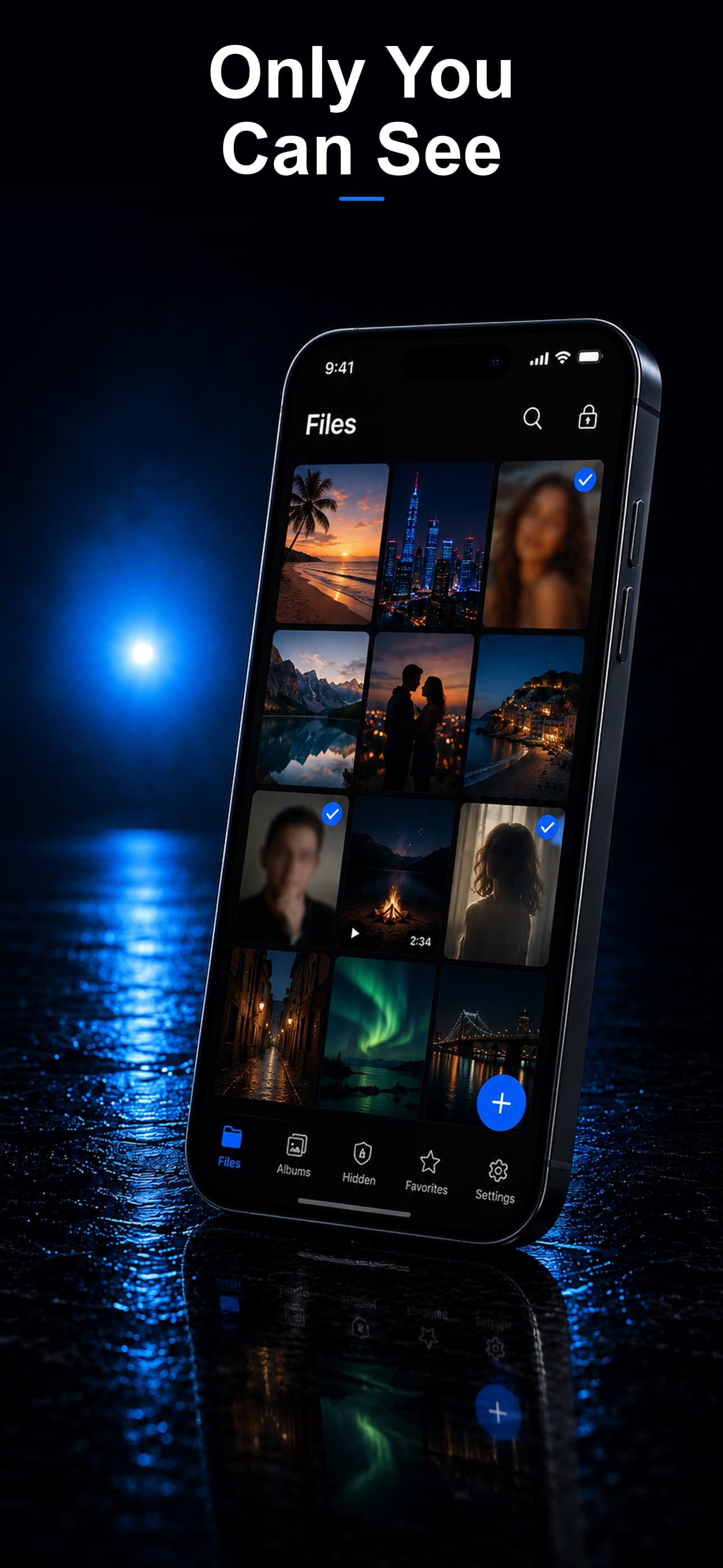
"Encrypted" is one of the most misused words in consumer tech. Plenty of apps advertise encryption while still holding the decryption keys themselves — which means a subpoena, court order, or internal policy change can unlock your data without your involvement. Real protection depends entirely on where the keys live, not just whether encryption exists.
The Difference Between Server-Side and On-Device Encryption
- Server-side (custodial) encryption: A company encrypts your data but stores the keys on its own servers. This is how most cloud storage, including standard iCloud backups, has historically worked. The company technically can decrypt your data if legally compelled to.
- On-device (zero-knowledge) encryption: Your files are encrypted using a key derived from your own passcode, generated and stored only on your device. The app developer never has access to the key and cannot decrypt your files even if ordered to.
This distinction is why the 2016 Apple–FBI standoff over the San Bernardino shooter's iPhone became a landmark case: Apple could not simply hand over the contents because the device's encryption keys were never in Apple's possession. The FBI ultimately paid a third party for an exploit rather than compel Apple to break its own encryption.
How This Applies to Everyday File Storage
Stash uses AES-256 encryption — the same standard used by banks and government agencies for classified data — applied entirely on-device. There is no server component at all, meaning there is no key custodian to subpoena, no company database to breach, and no backdoor to request.
What "No Backdoor" Actually Means
Governments have repeatedly proposed mandatory backdoors in encryption, from the 1990s "Clipper Chip" to more recent proposals in the UK's Investigatory Powers Act and EU "Chat Control" discussions. Security researchers consistently point out the same flaw: a backdoor built for law enforcement is a backdoor that can be found and used by anyone else too. Stash has no such mechanism because there is no remote access point to build one into.
What Happens If Your Device Is Forensically Examined
Tools like Cellebrite and GrayKey can extract raw data from a phone's storage, but extraction is not the same as readability. Data encrypted with a key derived from a strong, unique passcode remains unreadable without that passcode — forensic tools cannot brute-force AES-256 in any practical timeframe.
Why This Matters Even If You Trust the Government
Encryption protecting your files isn't only about wrongdoing — it protects against data breaches, insider misuse, policy changes at the company storing your data, and future administrations with different priorities than today's.
Download Stash from the App Store