You clear customs, and an officer asks you to unlock your phone. In the United States, this request falls under the "border search exception," a doctrine that allows warrantless searches of devices at international borders and ports of entry — no probable cause, no warrant, and in most circuits, minimal suspicion required. Similar rules exist in the UK, Canada, Australia, and across the EU, each with its own thresholds and appeal processes.
CBP data shows device searches at U.S. borders have risen sharply over the past decade, from a few thousand a year to tens of thousands. Journalists, researchers, lawyers, and ordinary travelers carrying nothing illegal have all reported having phones searched, copied, or held for weeks.
What Border Agents Can Actually Do
- Basic search: Manually browsing your phone's visible apps, photos, and messages.
- Advanced search: Connecting your device to forensic extraction tools that copy data, sometimes retaining a copy indefinitely.
- Detainment: Refusing to unlock your device can result in the device being confiscated, and in some jurisdictions, delayed entry.
- No warrant requirement: Unlike a police search inside the country, none of this requires a judge's approval.
Build a Layer They Can't See Past
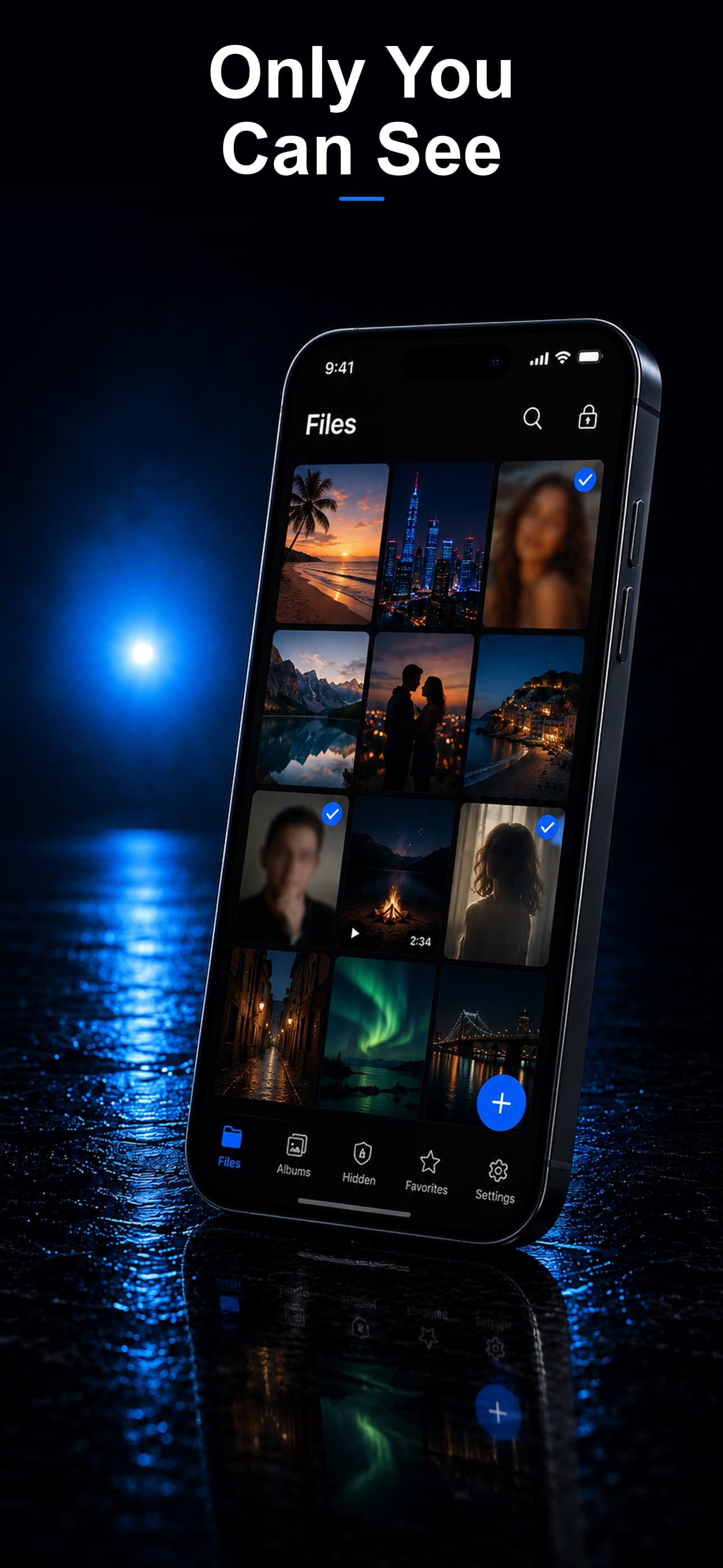
The goal is not to refuse a search — that has its own consequences — but to control what is actually visible. Stash stores sensitive files inside an AES-256 encrypted vault disguised as a calculator, fitness tracker, or music player app. An agent scrolling through your home screen and apps sees nothing that reads as a vault.
Before You Travel
Move sensitive photos, documents, and files into Stash well before your trip, not at the airport. Delete the unencrypted originals from your camera roll and Files app, and empty Recently Deleted so no unencrypted trace remains outside the vault.
If You're Asked to Unlock Your Phone
Because Stash is disguised, unlocking your phone reveals only what a normal phone reveals — nothing that points to a hidden vault. A decoy vault, opened with a separate passcode, can be shown if you are specifically asked to prove there is nothing sensitive stored, without ever exposing your real files.
Know the Legal Landscape Where You're Traveling
Rules differ by country and by citizenship status. U.S. citizens cannot be denied entry for refusing to unlock a device, but the device can still be held. Non-citizens and visa holders generally have far less leverage. Research the specific policy for your destination before you go.
Download Stash from the App Store