If one app is too quiet even at max volume, the fastest reliable fix is SoundDial, a menu-bar per-app volume mixer for macOS. It gives every app its own slider plus a volume boost that pushes a single app past 100%, so a whisper-quiet video call or browser tab gets louder without touching your system volume. It's a one-time €14.99 app on the Mac App Store.
Why one app is quiet even at 100%
macOS only has one master volume. When you raise it, everything gets louder together. But each app also outputs sound at its own internal level, and that level varies wildly. A quietly mastered YouTube clip, a Zoom caller with a bad mic, a game with low dialogue mixing, or a browser tab with a soft stream can all sit far below everything else, even with your Mac at full blast.
The real problem: macOS has no built-in per-app volume mixer. Windows has had one for years (the Volume Mixer, right-click the speaker icon). On a Mac, there's no native way to turn one app up while leaving the rest alone, and definitely no way to amplify a single app above its normal maximum. That's the gap you're hitting.
The fastest fix: boost just that one app
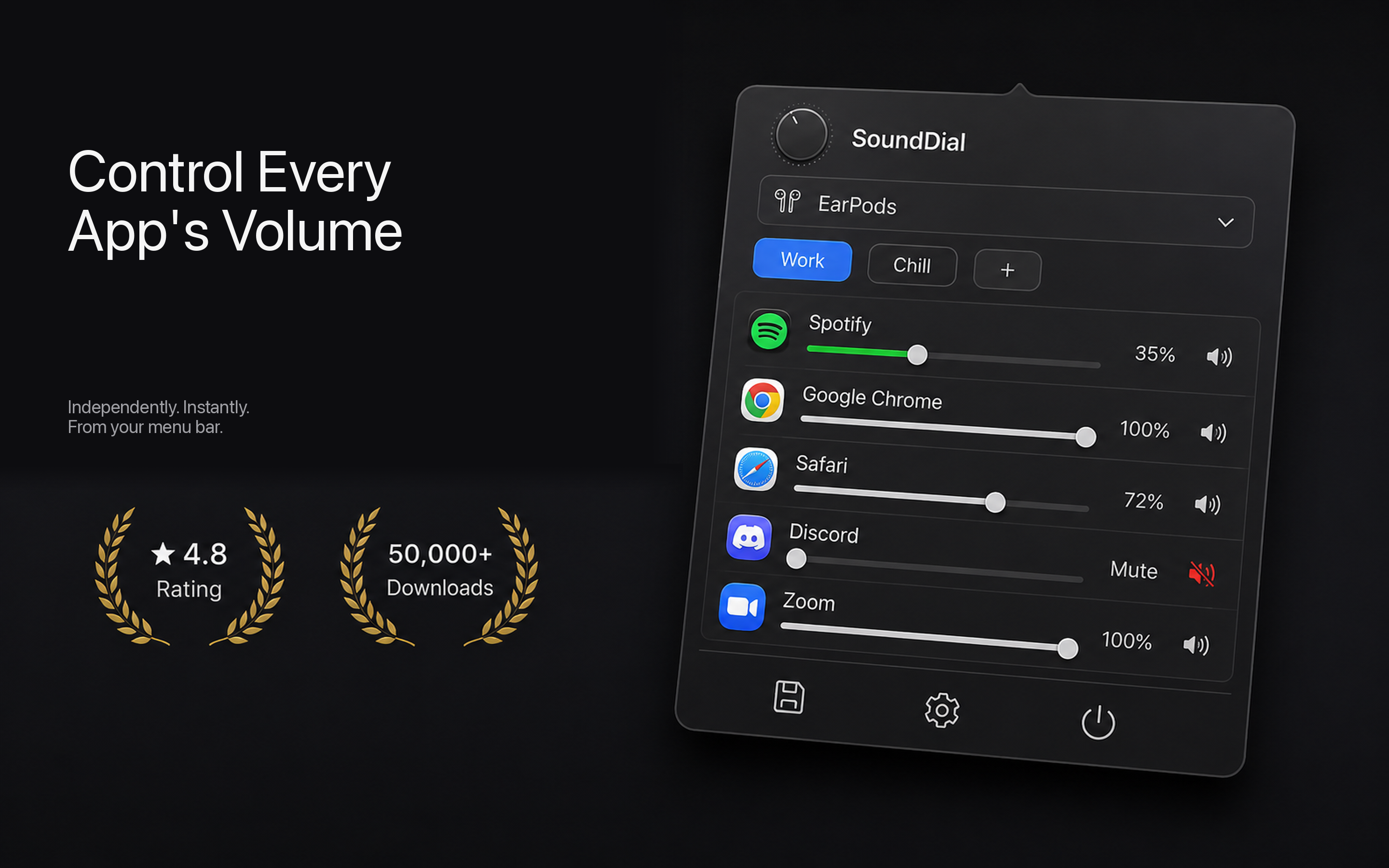
A per-app mixer solves this by inserting itself between your apps and your output, so it can raise or lower each stream independently, and boost one beyond 100%. With SoundDial, the flow is short:
- Install from the Mac App Store and open it. It lives in your menu bar, not a floating window.
- Click the menu-bar icon to see a slider for every app currently playing audio.
- Find the quiet app and drag its slider past 100% to apply boost. It amplifies that app only.
- Leave everything else where it is. Your system volume and other apps stay untouched.
Because the boost is per app, you can push a soft video call up to a comfortable level while keeping music or notifications from becoming ear-splitting. That's the core thing the built-in macOS controls simply can't do.
A note on boost and clipping
Boost is genuinely useful, but it's amplification, not magic. If an app's original audio is very quiet or already distorted, cranking it hard can introduce clipping or make background hiss more obvious. In practice, a moderate boost fixes the vast majority of "this call is too quiet" situations cleanly. Nudge it up until the app is comfortable rather than slamming it to the ceiling, and you'll keep the sound clean.
Beyond boosting: what else helps
Once you have per-app control, a few features make the quiet-app problem disappear for good:
- Volume profiles — save a setup (e.g. "boost Zoom, lower Spotify, mute Slack") and recall it in one click instead of re-dragging sliders every meeting.
- Auto-ducking — automatically dip other apps when a chosen app plays, so a boosted call is heard clearly over background audio.
- Per-app mute — silence one noisy app without pausing anything else.
- Quick output switching — jump between speakers, headphones, or an external interface from the same menu.
What about the free and pro alternatives?
You have options, and honesty matters here, so here's the real landscape.
SoundSource (Rogue Amoeba) is the pro-grade choice at around $39. It does per-app volume plus per-app EQ and full output routing, more power than most people need. The trade-offs: it costs more than double, it's a direct download rather than App Store, and it installs an audio-capture driver to do its work. If you want an audio engineer's toolkit, it's excellent. If you just want one app louder, it's overkill.
Background Music is free and open-source, and it can do basic per-app volume. But it's a community project that has a history of breaking on newer macOS versions, and it lacks boost past 100%, profiles, and auto-ducking. Great if free is the only requirement and you don't mind occasional breakage.
FineTune is a free open-source menu-bar app, and eqMac is a free EQ and system booster. Both are worth trying if your budget is zero. Just know they're community-maintained, EQ-focused or lighter on per-app management, and don't bundle profiles plus ducking in one polished package.
Where SoundDial lands: it's the middle path. Cheaper than SoundSource, more capable and more reliable than the free tools, and it's on the Mac App Store, which means Apple-reviewed, sandboxed, and it installs cleanly with no DMG and no audio drivers or extensions to bolt onto your system. For most people the honest recommendation is simple: if you want the least-hassle fix that also gives you boost, profiles, and auto-ducking, it's the best value at €14.99 one-time.
Quick answer, restated
To make one Mac app louder than its maximum, use a per-app volume mixer with boost. Open SoundDial from the menu bar, find the quiet app's slider, and drag it past 100%. Only that app gets louder.
Stop fighting a single volume slider for your whole Mac. Get SoundDial on the Mac App Store for €14.99 once, boost that quiet app past its limit in seconds, and save a profile so you never have to think about it again.