Katsot elokuvaa Netflixistä. Kaksi hahmoa keskustelee — heitä tuskin kuulee. Nostat äänenvoimakkuutta. Alkaa toimintakohtaus. Räjähdykset ovat korvia huumaavia. Yrität kiireesti löytää äänenvoimakkuuden näppäimen. Tämä on yleisin valitus suoratoistoäänestä, ja se on pahempaa Mac:n sisäänrakennetuissa kaiuttimissa.
Ongelma ei ole sinun Mac. Näin elokuvat ja TV-sarjat hallitaan — ja se, että macOS ei anna työkaluja korjata sitä.
Miksi suoratoistoäänen äänenvoimakkuus vaihtelee villisti
Elokuvat ja TV-sarjat masteroidaan korkealla Dynaaminen alue — ero hiljaisimpien ja kovimpien äänien välillä. Teatterissa, jossa on voimakkaat kaiuttimet ja subwoofer, tämä kuulostaa uskomattomalta. Kuiskaukset ovat intiimejä, räjähdykset voimakkaita.
MacBookin 2-tuumaisissa kaiuttimissa tuo dynaaminen alue muodostuu haitaksi. Hiljaiset osat ovat alle sen, mitä pienet kaiuttimet selvästi pystyvät toistamaan, kun taas kovat osat yltävät kaiuttimen fyysiseen rajaan. Päädyt jatkuvasti säätämään äänenvoimakkuutta — kääntämään äänenvoimakkuutta kovemmalle dialoissa ja laskemassa toiminnalle.
Korjaus 1: Ota käyttöön "Vähennä kovia ääniä" suoratoistosovelluksessa
Joissakin suoratoistopalveluissa on äänenvoimakkuuden normalisointiominaisuus:
- Netflix: Toiston aikana klikkaa kaiutinkuvaketta → tarkista, onko siellä "Vähennä kovia ääniä" -vaihtoehto (saatavilla selaimessa ja natiivisovelluksessa)
- Apple TV+: Asetukset → saavutettavuus → "Vähennä kovia ääniä"
- Disney+: Vastaavaa asetusta ei tällä hetkellä ole saatavilla
- Amazon Prime Video: "Dialogiboosti" -ominaisuus (jos saatavilla otsikon mukaan)
Nämä ominaisuudet tiivistävät dynaamista aluetta — tehden hiljaisista äänistä kovempia ja kovia hiljaisempia. Tuloksena on tasaisempi äänenvoimakkuus, joka toimii paremmin pienillä kaiuttimilla ja matalilla kuuntelutasoilla.
Korjaus 2: Tarkista Mac äänenvahvistin
Joissakin Mac malleissa macOS soveltaa äänenkäsittelyä sisäänrakennettuihin kaiuttimiin. Tarkista järjestelmäasetuksista → äänistä, löytyykö lähtölaitteellesi parannusvaihtoehtoja. MacBook Pron 14" ja 16" malleissa kaiutinjärjestelmässä on tilallinen äänikäsittely, joka voi vaikuttaa havaittuun äänenvoimakkuuteen.
Korjaus 3: Käytä langallisia kuulokkeita
Kuulokkeet ohittavat kaiuttimien koon ongelman kokonaan. Jopa halvat langalliset kuulokkeet pystyvät toistamaan hiljaisen dialogin selkeästi, koska ajuri on aivan tärykalvon vieressä. Pienissä kaiuttimissa ongelmana oleva dynaaminen alue on etu kuulokkeissa.
Korjaus 4: Nosta suoratoiston ääni yli 100 %:n
Jos sisältö on liian hiljaista — vaikka normalisointi olisi päällä ja volyymi maksimitasolla — tarvitset vahvistusta, joka ylittää sen, mitä macOS tarjoaa.
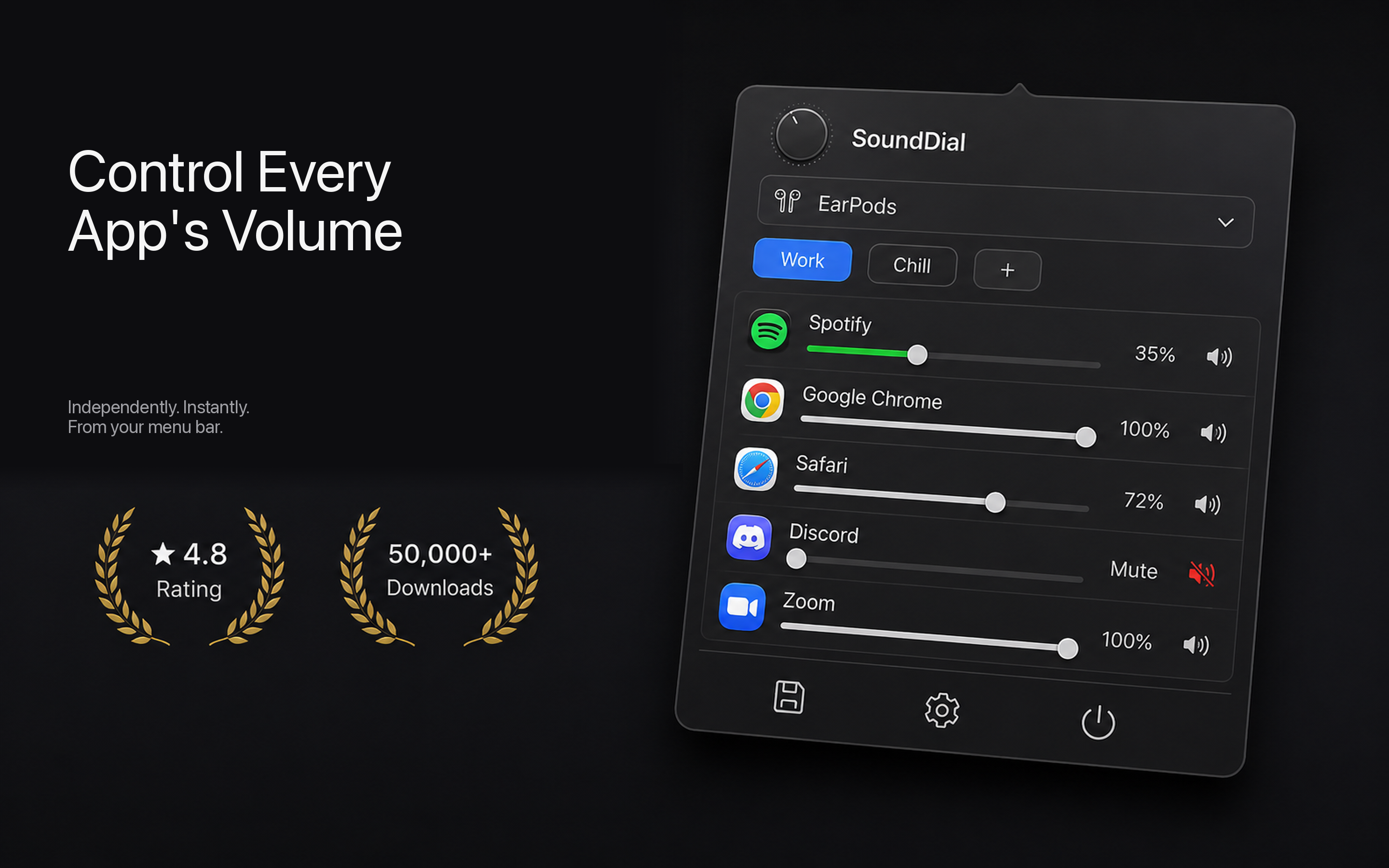
SoundDial Voi nostaa minkä tahansa sovelluksen tasolle 200%. Jos Safari tai Netflix-sovellus on liian hiljainen, vedä liukusäädin yli 100 %. Ääni vahvistetaan ennen kuin se saavuttaa kaiuttimesi, mikä käytännössä kaksinkertaistaa juuri kyseisen sovelluksen maksimiäänenvoimakkuuden.
Tämä on erityisen hyödyllistä, kun:
- Katsella hiljaista vierasta elokuvaa, jossa dialogi on pehmeää
- Vanhan sisällön suoratoisto, joka on masteroitu alemmalla tasolla
- MacBook-kaiuttimien käyttö meluisassa ympäristössä
- Yksi suoratoistopalvelu on huomattavasti hiljaisempi kuin toinen
Ja koska SoundDial ohjaa jokaista sovellusta itsenäisesti, Netflixin nostaminen 150 %:iin ei tee Spotifysta tai Slackista äänekkäämpää. Jokainen sovellus pysyy omalla tasollaan.
Saat SoundDial Mac App Storesta — 14,99 € kertaluonteinen ostos, ilman tilausta, macOS 14,2+.