Tässä on järkevä asia, jonka saatat haluta tehdä: soita musiikkia pöytäkaiuttimista samalla kun otat Zoom-puhelun AirPodseillasi. Musiikki täyttää huoneen, puhelu on yksityinen korvissasi. Kuulostaa täysin järkevältä.
macOS sanoo ei. Kun valitset äänilähtölaitteen, jokaisen Sovellus käyttää sitä. Vaihda AirPodsiin Zoomia varten ja Spotify vaihtaa myös AirPodsiin. Vaihda kaiuttimiin Spotifyssa, ja Zoom menee myös kaiuttimiin. Yksi lähtölaite kaikkeen. Ei poikkeuksia.
Miksi macOS voi tehdä tätä natiivisti
macOS reitittää kaiken äänen yhden valitun lähtölaitteen kautta. Valitset "MacBook Pro Speakers" tai "AirPods Pro" järjestelmäasetuksista → Sound → Outputista, ja jokainen sovellus lähettää äänen kyseiselle laitteelle. Sovelluskohtaista äänen reititystä ei ole.
Tämä suunnittelu on järkevä yksinkertaisuuden vuoksi — useimmat haluavat kaiken äänen tulevan samasta paikasta. Mutta se hajoaa heti, kun haluat eri sovelluksia eri ulostuloille.
Aggregaattilaitteen kiertotie
macOS:n Audio MIDI -asetus (löytyy Applications → Utilities -osiosta) antaa sinun luoda "Aggregate Device", joka yhdistää useita ulostuloja yhdeksi. Kuitenkin aggregaattilaite lähettää Sama ääni kaikille yhdistetyille ulostuloille — ei voi valita, mikä sovellus menee mihinkin ulostuloon. Se on suunniteltu monikaiutinasetuksiin, ei sovelluskohtaiseen reititykseen.
Monilähtölaitteen kiertotie
Kuten aggregaattilaitteissa, voit luoda "Multi-Output Device" -laitteen Audio MIDI Setupissa. Tämä lähettää identtisen äänen useille lähtöille samanaikaisesti. Taas kerran, ääni on sama kaikkialla — et voi reitittää Spotifyta kaiuttimiin ja Zoomia kuulokkeisiin tällä tavalla.
Mikä oikeasti toimii: sovelluskohtaiset äänen reitityssovellukset
Jotta voit todella reitittää eri sovelluksia eri lähtölaitteisiin, tarvitset kolmannen osapuolen äänenreitityssovelluksen, joka sieppaa jokaisen sovelluksen äänen ja lähettää sen määrittelemällesi ulostulolle. Sovellukset kuten SoundSource (Rogue Amoebalta) tukevat tätä — niiden avulla voit määrittää yksittäisiä lähtölaitteita yksittäisille sovelluksille.
Yksinkertaisempi lähestymistapa: tilavuuteen perustuva erottelu
Jos päätavoitteesi on kuulla puhelusi selkeästi musiikin yli (sen sijaan, että ohjaisit ne fyysisesti eri laitteille), sovelluskohtainen äänenvoimakkuuden säätö ratkaisee ongelman yksinkertaisemmin.
SoundDial antaa jokaiselle sovellukselle oman äänenvoimakkuusliukusäätimen. Puhelun aikana voit:
- Aseta Zoom/Teams/FaceTime tilaan 100%
- Laske Spotify 20%
- Mykistä kaikki muu
Päätöksesi on kristallinkirkas. Musiikki on hienovarainen tausta. Laitteen vaihtoa ei tarvita.
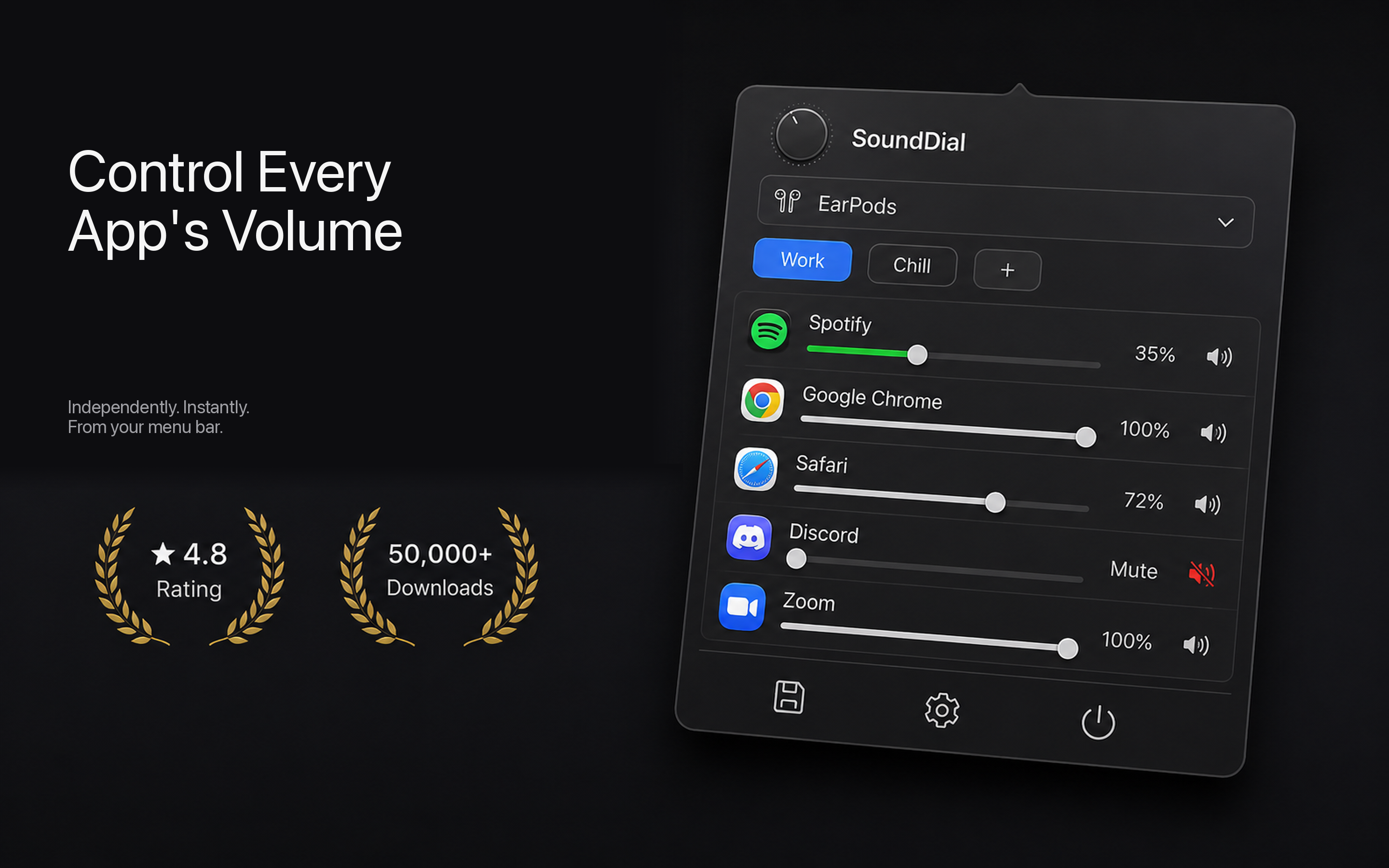
Vielä parempi: SoundDial Automaattinen kyykistyminen tekee tämän automaattisesti. Kun liityt puheluun, se havaitsee mikrofonin aktivoitumisen ja laskee kaikki taustasovellukset tasolle, jonka olet asettanut (oletusarvo 30 %). Kun puhelu päättyy, kaikki palaa normaaliksi. Manuaalista liukusäädintä ei tarvita.
Useimmille tämä ratkaisee varsinaisen ongelman — "En kuule puheluani musiikin yli" — ilman monimutkaisuutta reitittää eri sovelluksia eri fyysisille laitteille.
Saat SoundDial Mac App Storesta — 14,99 € kertaluonteinen ostos, ilman tilausta, macOS 14,2+.