If you used eqMac for its EQ and volume booster but really want independent volume for each app — plus mute, boost, and saved profiles — the fastest reliable fix is SoundDial. It's a Mac App Store menu-bar mixer: set a level per app, boost quiet ones, and switch profiles instantly. €14.99 one-time, sandboxed, no drivers to install.
eqMac vs. what you actually need
eqMac is a solid free tool, and its system-wide equalizer and volume booster are genuinely useful. But eqMac is built around one master EQ and one master output. It doesn't give you a real per-app volume mixer — the thing Windows has had for years and macOS still doesn't ship natively.
So if your real problem is "Spotify is too loud while I'm on a call" or "this one game blows out my ears but everything else is fine," eqMac isn't the right shape for the job. You end up riding a single master slider or fiddling with each app's internal volume. That's the gap SoundDial fills.
What SoundDial does that eqMac doesn't
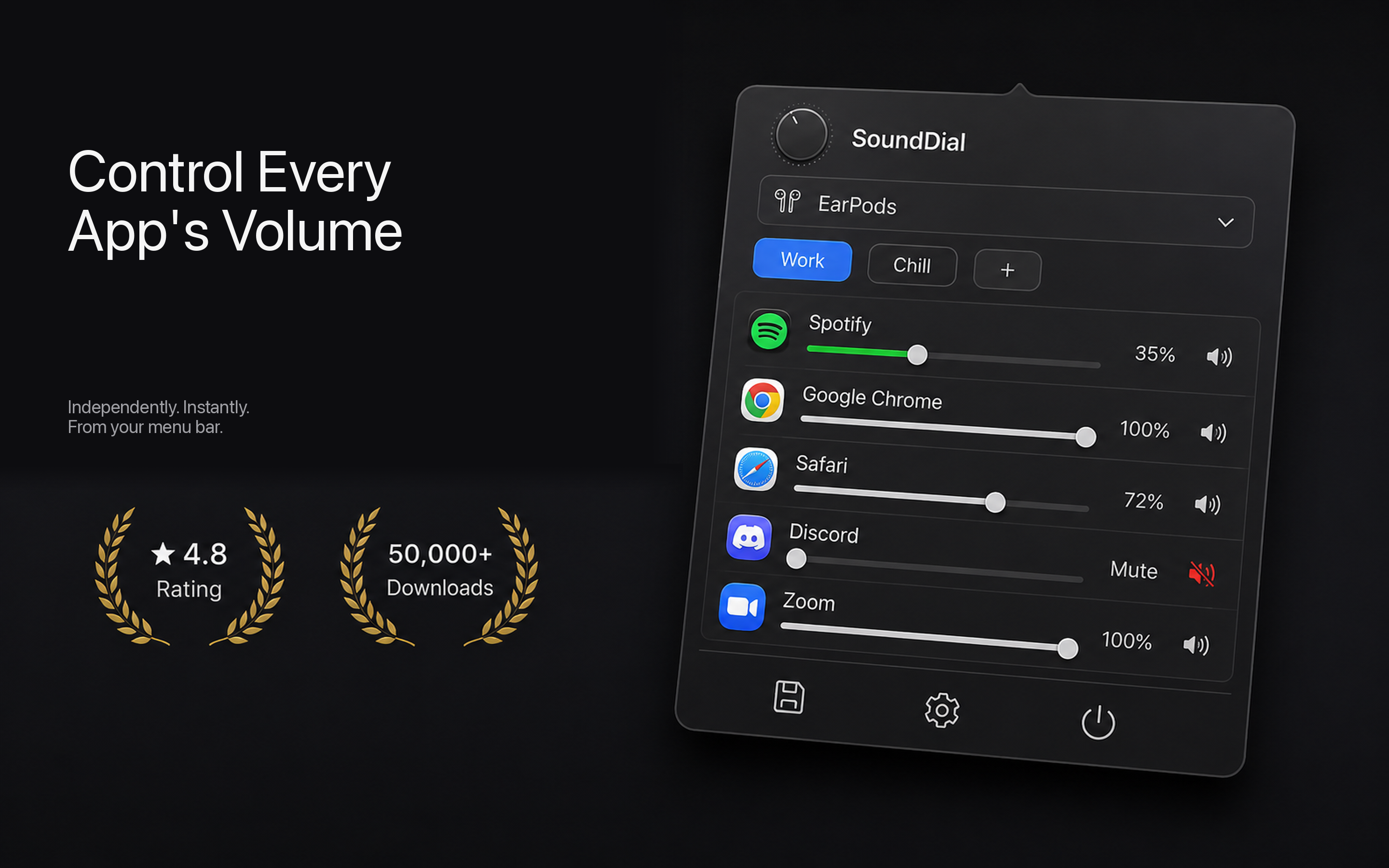
- Independent volume per app — Music at 40%, a browser at 100%, a video call at 70%, all at once, all remembered.
- Per-app mute — silence one noisy app instantly without touching anything else.
- Per-app boost — push a quiet app past its normal ceiling, the way eqMac's booster does, but targeted at a single app instead of the whole system.
- Volume profiles — save setups like "Focus," "Gaming," or "Meeting" and switch the whole mix in one click.
- Auto-ducking — automatically drop background audio when something more important starts, so you don't scramble for a slider mid-call.
- Quick output switching — jump between speakers, headphones, and other outputs from the menu bar.
The overlap with eqMac is basically the boost. Everything else — the mixer, mute, profiles, ducking — is territory eqMac was never designed to cover.
Do you still want EQ?
Be honest about which problem you're solving. If you genuinely need frequency EQ — cutting bass, taming harsh highs, shaping your whole system's tone — then eqMac still has a place, and it's free. SoundDial is a volume mixer, not an equalizer.
But most people reach for eqMac's booster not because they want to shape frequencies, they want one app louder or the mix balanced. If that's you, a dedicated mixer is the cleaner answer. You can even run both: keep eqMac for a system-wide EQ curve and use SoundDial for per-app levels. They don't fight over the same job.
How it compares to the other Mac audio tools
Since you're already tool-hunting, here's the honest landscape:
- SoundSource (Rogue Amoeba) — the pro-grade option at around $39, with per-app EQ and full output routing. Powerful, but it needs a direct download and installs an audio capture driver. Overkill and pricier if all you want is per-app volume with profiles.
- Background Music — free and open source, but it can break on newer macOS releases and has no boost, no profiles, and no auto-ducking. Great when it works, frustrating when it doesn't.
- FineTune — a free open-source menu-bar app. Worth a look if $0 is the hard requirement, though it's lighter on features and polish.
- eqMac — free EQ plus booster, but no true per-app mixer, as covered above.
SoundDial sits in the sweet spot: more focused and cheaper than SoundSource, more capable and more reliable than the free options, and it does the per-app job eqMac doesn't.
Why the Mac App Store matters here
Several of these tools require a direct download and a kernel-level or capture audio driver. Those work, but they're the kind of thing that can snag on a macOS update or trip up on a locked-down work Mac.
SoundDial ships through the Mac App Store instead. That means it's Apple-reviewed and sandboxed, it installs cleanly with no DMG to drag, and there are no audio drivers or system extensions to approve. Updates arrive through the App Store like any other app, and uninstalling is a normal delete. For a menu-bar utility that touches your audio, that lower-friction, lower-risk path is worth a lot.
The quick setup
- Install SoundDial from the Mac App Store — no restart, no driver prompt.
- Open the menu-bar icon; every app currently making sound shows up with its own slider.
- Set levels, mute what you don't need, and boost anything too quiet.
- Save the arrangement as a profile, then create more for gaming, calls, or focus.
- Turn on auto-ducking so background audio steps aside automatically.
That's the whole loop. Within a couple of minutes you have the per-app control eqMac's booster only hinted at.
Ready for real per-app volume on your Mac? Get SoundDial on the Mac App Store — €14.99 one-time, sandboxed, no drivers, and it does exactly what a menu-bar mixer should.