macOS ei ole sisäänrakennettua äänenvoimakkuusmikseriä. Jos haluat hallita yksittäisten sovellusten äänenvoimakkuutta — laskea Spotify vaikuttamatta Zoomiin, mykistää Slack ilman kaiken mykistämistä — tarvitset kolmannen osapuolen sovelluksen.
Vaihtoehtoja on useita. Tämä opas vertaa merkittävimpiä ominaisuuksien, hinnoittelun, yhteensopivuuden ja todellisen käytettävyyden perusteella. Ei affiliate-linkkejä, ei sponsoroituja vihjeitä.
Mitä sinun tulisi etsiä
Ennen kuin vertaat sovelluksia, tässä on se, mikä on tärkeää Mac äänenvoimakkuusmikserissä:
- Sovelluskohtaiset volyymiliukusäätimet — itsenäinen ohjaus jokaiselle käynnissä olevalle sovellukselle
- Tilavuusalue — voitko mennä alle 100 % JA yli 100 % (boost)?
- Sovelluskohtainen mykistys — hiljennä yksi sovellus koskematta sen äänenvoimakkuusasemaan
- Profiilit — tallenna ja vaihda äänenvoimakkuuskonfiguraatioiden välillä
- Auto-ducking — laske musiikkia automaattisesti puheluiden aikana
- Valikkopalkin integraatio — nopea pääsy ilman sovelluksen vaihtamista
- macOS yhteensopivuus — toimii uusimmalla macOS versiolla
- Hinnoittelumalli — kertamaksu vs. tilaus
Vaihtoehdot
SoundDial
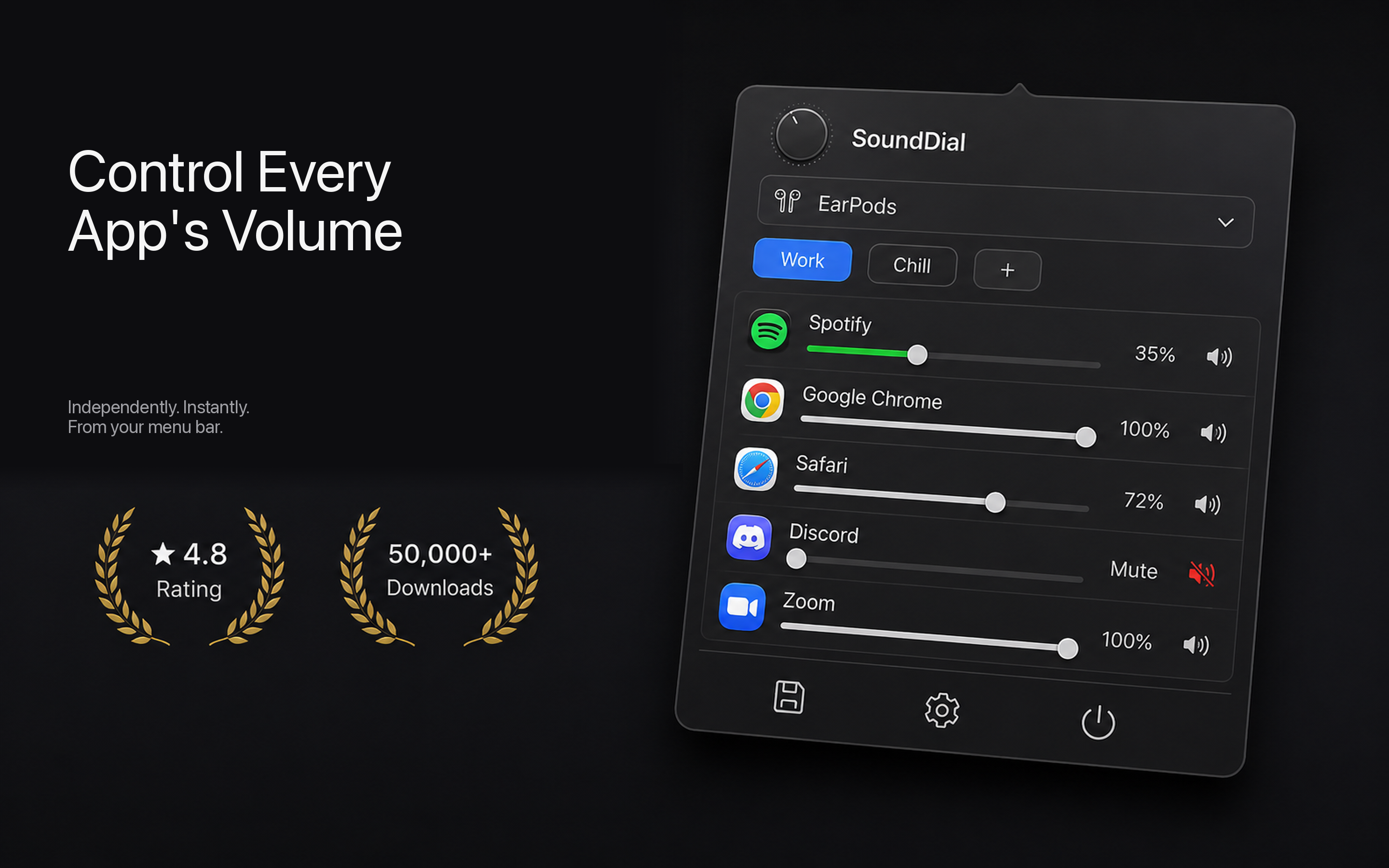
SoundDial on natiivi macOS valikkopalkkisovellus, joka keskittyy yhteen asiaan: sovelluskohtaiseen äänenvoimakkuuden hallintaan.
- Sovelluskohtainen volyymi: Kyllä, 0 % - 200 %
- Sovelluskohtainen mykistys: Kyllä, yhdellä klikkauksella
- Äänenvoimakkuuden nosto: Kyllä, jopa 200 %
- Profiilit: Kyllä, omilla nimillä ja kuvakkeilla
- Automaattinen kumartelu: Kyllä, konfiguroitavalla ankkatasolla
- Näppäimistön pikanäppäimet: Kyllä (mikserikytkentä, mykistää kaikki)
- Lähtölaitteen kytkentä: Kyllä, samasta paneelista
- Volyymimuisti: Kyllä, muistaa jokaisen sovelluksen äänenvoimakkuuden uudelleenkäynnistysten välillä
- Hinta: €14,99 kertaluonteinen ostos (ilman tilausta) — alle puolet SoundSourcen hinnasta
- Vaatii: macOS 14.2+
- Saatavilla osoitteessa: Mac App Store (Apple-arvostelu, hiekkalaatikko, ei järjestelmäajureita)
SoundDial käyttää Applen modernia Core Audio Tap API:ta puhtaaseen prosessikohtaiseen äänenhallintaan. Se on kevyt, pyörii kokonaan valikkopalkissa eikä vaadi monimutkaisia asetuksia. 14,99 €:lla se on huomattavasti halvempi kuin SoundSource (39 $) ja sisältää ominaisuuksia, joita SoundSourcelta puuttuu — äänenvoimakkuusprofiilit ja automaattinen kumartuminen. Ja koska se on Mac App Storessa, se on Applen arvioima, hiekkalaatikkoon laitettu ja asennetaan siististi ilman DMG:n lataamista tai järjestelmän ääniajurien asentamista.
SoundSource (Rogue Amoeba)
SoundSource on yksi vanhimmista ja vakiintuneimmista Mac äänipalveluista. Se on tehokas ja ominaisuuksiltaan rikas, suunnaten tehokäyttäjille ja äänialan ammattilaisille.
- Sovelluskohtainen volyymi: Kyllä
- Sovelluskohtainen mykistys: Kyllä
- Äänenvoimakkuuden nosto: Kyllä
- Sovelluskohtainen EQ: Kyllä (sisäänrakennettu ja AU-lisäosa)
- Sovelluskohtainen lähtöreititys: Kyllä (lähetä eri sovelluksia eri kaiuttimille)
- Profiilit: Ei sisäänrakennettua profiilijärjestelmää
- Automaattinen kumartelu: Ei
- Hinta: $39 USD (kertaluonteiset, suuret päivitykset saattavat vaatia lisäostoa)
- Vaatii: macOS 12+ (asentaa järjestelmän ääniajurin)
SoundSource on tehokkain vaihtoehto, jos tarvitset sovelluskohtaisia EQ- ja ääniefektiketjuja. Se asentaa järjestelmätason ääniajurin (ACE) sieppaamaan ääntä, mikä tekee siitä erittäin kykenevän mutta myös tunkeilevamman. 39 dollarin hinta on korkeampi kuin useimmissa vaihtoehdoissa, eikä niissä ole automaattista kumartelua tai profiilijärjestelmää.
Taustamusiikki (ilmainen, avoimen lähdekoodin)
Background Music on ilmainen, avoimen lähdekoodin sovellus, joka tarjoaa perus äänenvoimakkuuden säädön per sovellus. Se on suosittu valinta, koska se on ilmainen.
- Sovelluskohtainen volyymi: Kyllä
- Sovelluskohtainen mykistys: Kyllä
- Äänenvoimakkuuden nosto: Ei (vain 0-100 %)
- Automaattinen taukomusiikki: Kyllä (pysäyttää musiikin, kun toinen sovellus toistaa ääntä)
- Profiilit: Ei
- Automaattinen kumartelu: Ei (automaattinen tauko eroaa automaattisesta ohjauksesta)
- Hinta: Vapaa
- Vaatii: macOS 10.13+ (asentaa virtuaalisen äänilaitteen)
Taustamusiikki on hyvä ilmainen vaihtoehto perus sovelluskohtaiseen äänenvoimakkuuteen. Sitä ei kuitenkaan ole päivitetty johdonmukaisesti uudemmille macOS-versioille. Käyttäjät raportoivat ongelmista macOS Sequoiassa ja Tahoessa — äänihäiriöistä, virtuaalisen äänilaitteen epäonnistumisesta asennuksesta tai sovelluksen tunnistamattomuudesta joidenkin sovellusten osalta. Se ei myöskään pysty nostamaan äänenvoimakkuutta yli 100 %, siinä ei ole profiileja eikä automaattista kumartelua.
eqMac
eqMac on ensisijaisesti taajuuskorjaussovellus, joka sisältää myös äänenvoimakkuuden sekoitusominaisuuksia.
- Sovelluskohtainen volyymi: Limited (keskittyy taajuuskorjaukseen, ei miksaukseen)
- Koko järjestelmän EQ: Kyllä, useilla bändivaihtoehdoilla
- Äänenvoimakkuuden nosto: Kyllä
- Profiilit: EQ-esiasetukset (ei äänenvoimakkuusprofiileja)
- Automaattinen kumartelu: Ei
- Hinta: Ilmainen taso + Pro-tilaus
- Vaatii: macOS 10.14+
eqMac on parempi valinta, jos pääasiallinen tarve on koko järjestelmän laajuinen taajuuskorjaus (basson korostus, diskantin säätö jne.) eikä sovelluskohtainen äänenvoimakkuuden säätö. Sen äänenvoimakkuuden sekoitusominaisuudet ovat toissijaisia EQ-ominaisuuksiin nähden.
Nopea vertailutaulukko
| Ominaisuus | SoundDial | SoundSource | Taustamusiikki |
|---|---|---|---|
| Sovelluskohtainen volyymi | Kyllä | Kyllä | Kyllä |
| Äänenvoimakkuuden korostus (200 %) | Kyllä | Kyllä | Ei |
| Volyymiprofiilit | Kyllä | Ei | Ei |
| Auto-ducking | Kyllä | Ei | Ei |
| Sovelluskohtainen taajuuskorjain | Ei | Kyllä | Ei |
| Sovelluskohtainen lähtöreititys | Ei | Kyllä | Ei |
| Näppäimistön pikanäppäimet | Kyllä | Kyllä | Ei |
| Järjestelmäajuri vaaditaan | Ei | Kyllä | Kyllä |
| Hinta | Kertaluonteinen | $39 | Vapaa |
Kumman sinun pitäisi valita?
- Jos haluat sovelluskohtaisen äänenvoimakkuuden säädön, profiilit ja automaattisen alistumisen: SoundDial — täydellisin tilavuusmikseri hintaluokassaan, ominaisuuksilla (profiilit, automaattinen kuihtuminen), joita vielä kalliimmilla vaihtoehdoilla ei ole.
- Jos tarvitset sovelluskohtaisen taajuuskorjaimen ja äänen reitityksen: SoundSource — tehokkain vaihtoehto, suunnattu äänialan ammattilaisille, jotka tarvitsevat efektiketjuja ja sovelluskohtaista ulostuloreititystä.
- Jos haluat jotain ilmaista ja perusasiaa: Taustamusiikki — kelvollinen yksinkertaiselle sovelluskohtaiselle äänenvoimakkuudelle, mutta voi olla yhteensopivuusongelmia uudemmissa macOS-versioissa eikä siinä ole boostia/profiileja/kumartumista.