AirPods usually drop to half volume on a Mac because macOS switched them from the high-quality A2DP audio profile to the low-quality hands-free (HFP) profile — the one built for phone-call microphone use. That mode caps output and quality. Fix it by forcing the Mac back to headphone-only audio, then boost the level to keep it there.
Why this happens: the codec switch
Bluetooth audio devices like AirPods run in one of two modes. When you're just listening, macOS uses A2DP — full stereo, full loudness, clean quality. But the moment an app wants your microphone, macOS switches the whole connection to HFP (Hands-Free Profile). HFP is a two-way telephony codec. It sounds thin, mono-ish, and noticeably quieter, because it was designed for voice calls, not music.
The problem is that macOS often stays stuck in HFP even after the app that grabbed the mic is done — or switches into it the instant you open Zoom, FaceTime, Teams, Discord, or a browser tab with mic permission. So your AirPods sound like they're at "half volume" not because the volume slider moved, but because the entire audio profile downgraded underneath you.
You'll recognize it: audio suddenly gets quiet and muffled, the AirPods show up twice in your sound settings (once as output, once as a microphone), and turning the system volume all the way up barely helps.
The re-pair and codec workarounds
These are the honest first steps. Work through them in order — one of the early ones usually clears it.
- Change your input device. Open System Settings → Sound → Input and pick your Mac's built-in microphone instead of the AirPods. This stops macOS from holding the AirPods in HFP mode, so output can climb back to full A2DP quality. This is the single most effective fix.
- Toggle Bluetooth off and on. A quick reset of the connection often re-negotiates A2DP cleanly, especially if the AirPods got stuck after a call ended.
- Reconnect the AirPods. Close the case, wait a few seconds, reopen it near the Mac, and reselect them as the output device.
- Quit the app that grabbed the mic. Fully quit Zoom, Teams, Discord, or that browser tab. Some apps hold the mic session open in the background and pin HFP until they're gone.
- Re-pair from scratch. Remove the AirPods under System Settings → Bluetooth (click the info button → Forget This Device), then pair again. This clears a corrupted profile negotiation that toggling alone won't fix.
- Reset the AirPods. With them in the case lid open, hold the setup button on the back until the light flashes amber then white. Re-pair afterward. This is the nuclear option for firmware-level weirdness.
- Update macOS and AirPods firmware. Apple has shipped Bluetooth audio fixes in point releases. AirPods firmware updates silently when they're charging near a connected device — so leave them in the case near your Mac overnight.
The pattern to watch: if the volume drops the instant you join a call and recovers when the call ends, it's the HFP switch — not a broken speaker or a settings glitch.
Why the fixes don't always stick
Here's the frustrating part. Even after re-pairing, macOS will happily switch your AirPods back into the quiet hands-free mode the next time any app touches the mic. You can't permanently disable that behavior in system settings — Apple treats it as automatic. So you end up re-doing the input-device trick several times a day, and any moment your AirPods are in a call or a mic-hungry app, they're capped at that lower level again.
There's also a second, separate issue people conflate with this one: some apps are just quieter than others at max system volume. A podcast player or a browser tab can sit well below what your ears want, even when the AirPods are running clean A2DP. macOS gives you one volume slider for everything and no per-app control, so there's no native way to push a single quiet app back up.
Boost the level back up — and keep it there
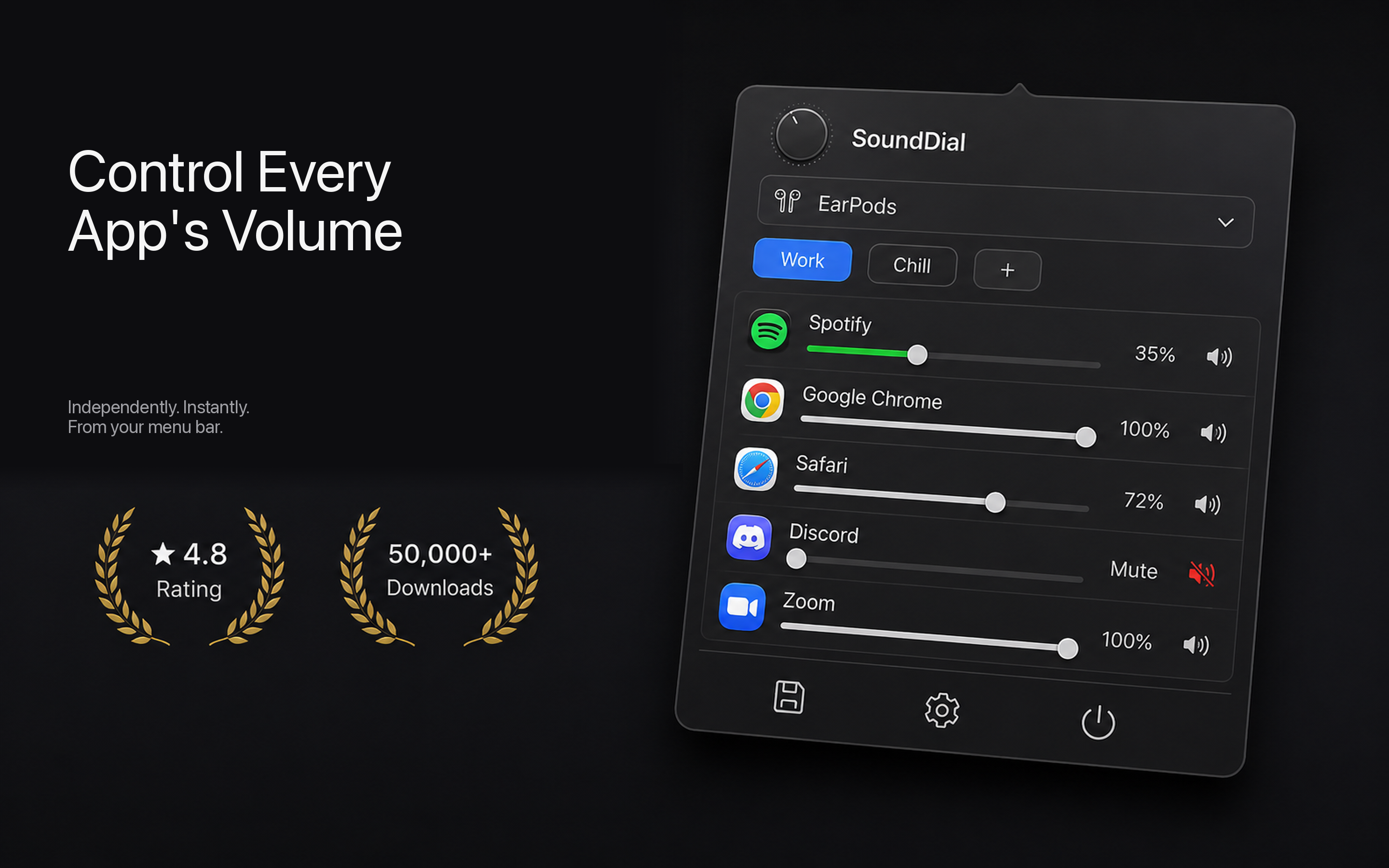
This is where a per-app volume mixer earns its place. SoundDial is a menu-bar app for macOS that gives every running app its own independent volume slider — including a boost above 100%. So when your AirPods come back from a call at a lower effective level, or a specific app is simply too quiet, you drag that app past the normal ceiling and it stays there.
Concretely, that means:
- Per-app volume BOOST. Push a quiet app above the standard maximum instead of straining to hear it at "full" system volume.
- Volume profiles. Save a set of levels — boosted browser, softer music, loud video calls — and switch the whole arrangement in one click so you're not re-adjusting after every reconnect.
- Quick output switching. Jump between AirPods, laptop speakers, and an external DAC from the menu bar without digging through System Settings, which helps when you're forcing a fresh profile negotiation.
- Per-app mute and auto-ducking. Silence one app without touching the rest, and let media dip automatically when something more important plays.
It's worth being clear about what this does and doesn't do. SoundDial won't force macOS to stay in A2DP — the input-device trick above is still your tool for the codec itself. What it does is give you back the loudness the downgrade stole, per app, so a quiet AirPods session or a stubbornly soft app is a one-drag fix instead of a lost cause. And because it's a sandboxed Mac App Store app, there's no audio driver to install, no DMG, no kernel extension — it just runs.
The short version
If your AirPods sound quiet and muffled on your Mac, switch your input device off the AirPods to force them out of hands-free mode, and re-pair if that fails. When the level still won't reach where you want it — or a single app is just too soft — reach for per-app boost so you set it once and move on.
Tired of fighting the volume slider every time you take a call? Get SoundDial on the Mac App Store — a one-time €14.99, no subscription, no drivers — and give every app its own volume.